Jurij Tokarski
MyCointainer Went Live in Four Months, After Hours
A licensed crypto staking platform, built after hours by two people with day jobs. It went live four months after I got the repo.
It started a few months after we finished G2A.COM's big redesign launch. Bartosz, my colleague on that launch, asked if I'd help build his startup idea.
Crypto had just peaked. Every company wanted its own token, and internal currencies were suddenly "coins".
His idea was MyCointainer, a shared staking platform. Some cryptocurrencies reward holders for staking their coins, much like a bank deposit: hold money, earn profit. In crypto it's called proof of stake, and the more coins a holder stakes, the bigger the rewards.
MyCointainer would pool users' coins, so many small holders staked as one big holder and shared the rewards. The pitch was simple: stake solo and make X, or use MyCointainer and make 2X.
The business model caught my attention, not the tech. MyCointainer took a small commission from users' rewards, so the project made money only when users did.
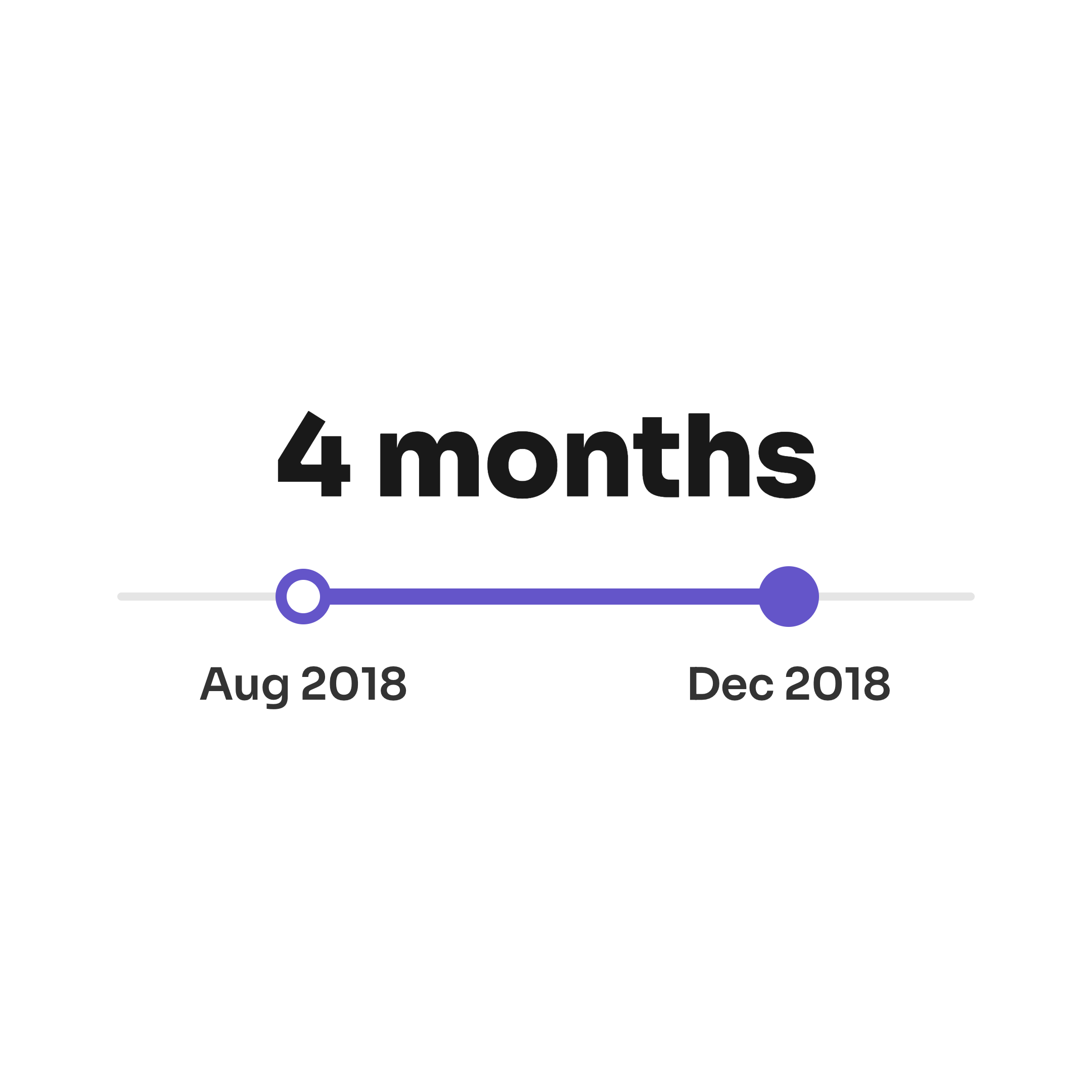
From Repo to Live in Four Months
In August 2018, Bartosz handed me the repo he had started, and I became MyCointainer's lead engineer. We both kept our full-time day jobs, so we built it after hours. Five weeks later, the public site with signups was live.
Going live took longer: handling fiat and crypto required a financial license. The Estonian license arrived in late 2018. Six days later, version 1.0 went live with about ten supported coins.
The deposit flow at launch had three parts:
- Each user got a unique wallet address after signup.
- The system tracked deposits and set each user's balance.
- Public block explorers showed every transaction, so any user could verify it on both the explorer and the platform.
Under the hood, version 1.0 ran on the MERN stack: MongoDB, Express.js, React and Node.js. The frontend was static files, SEO pages included, served by Express. The API ran in the same Express app, under /api/ routes.
Background workers checked wallet balances and ran other jobs. They were stateless, so they scaled easily, and in time some served only specific partner coins.
We also built an admin app, and it grew with the product. It covered identity checks (KYC), balance and reward monitoring, giveaways, airdrops, quick database fixes and new modules for repeatable tasks.
After launch, we polished the product, added coins and partnered with their developers. Users came slowly at first: two in launch week. Soon after, a front-end engineer and a content person joined, and by the end of 2018 the platform supported 18 coins.
Shared rewards, the heart of the pitch, still weren't live: each user's address earned only its own rewards.
Shared Rewards, Then 44 Coins
Shared rewards went live in early 2019, less than a month after launch. From then on, every reward a coin earned was split automatically among everyone who staked it. Later that year, bonus campaigns paid out in small daily chunks, so users saw profit sooner.
Through 2019, user feedback drove the roadmap. A community portal let users earn more, for example by referring friends or reporting bugs. Later in the year, a buy-only exchange let them buy coins for staking without leaving the platform.
By late 2019, the platform supported 44 coins, and we partnered directly with Waves, Neutrino USD and QTUM. The dashboard showed each coin's value and the rewards it was generating.
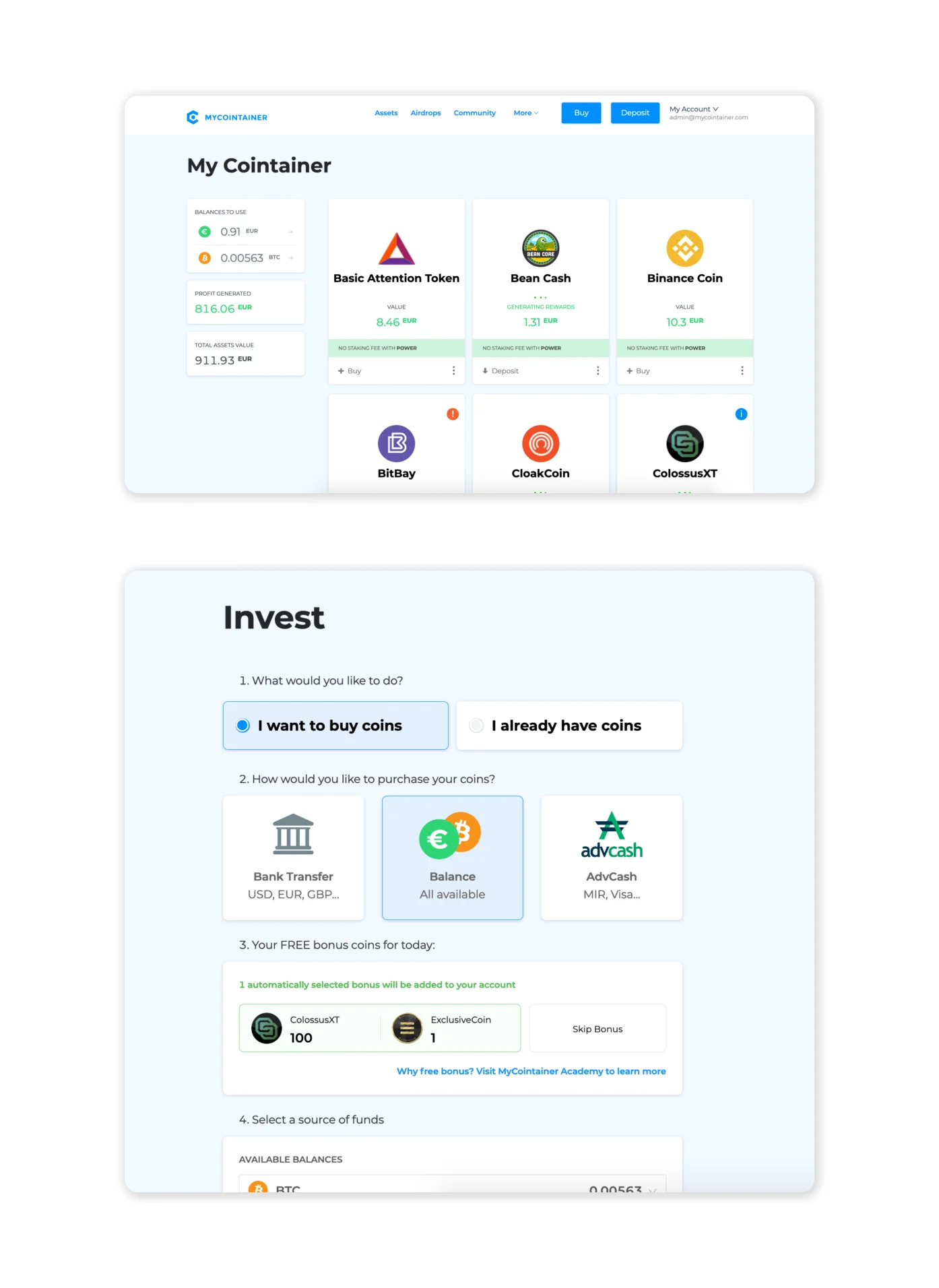 The dashboard and the invest page: every coin's value on one screen, and a guided flow to buy more.
POWER, Then 59 Coins
In early 2020, we launched POWER, a subscription in place of the commission. It also added cold staking, where coins earn rewards while they stay in the user's own wallet.
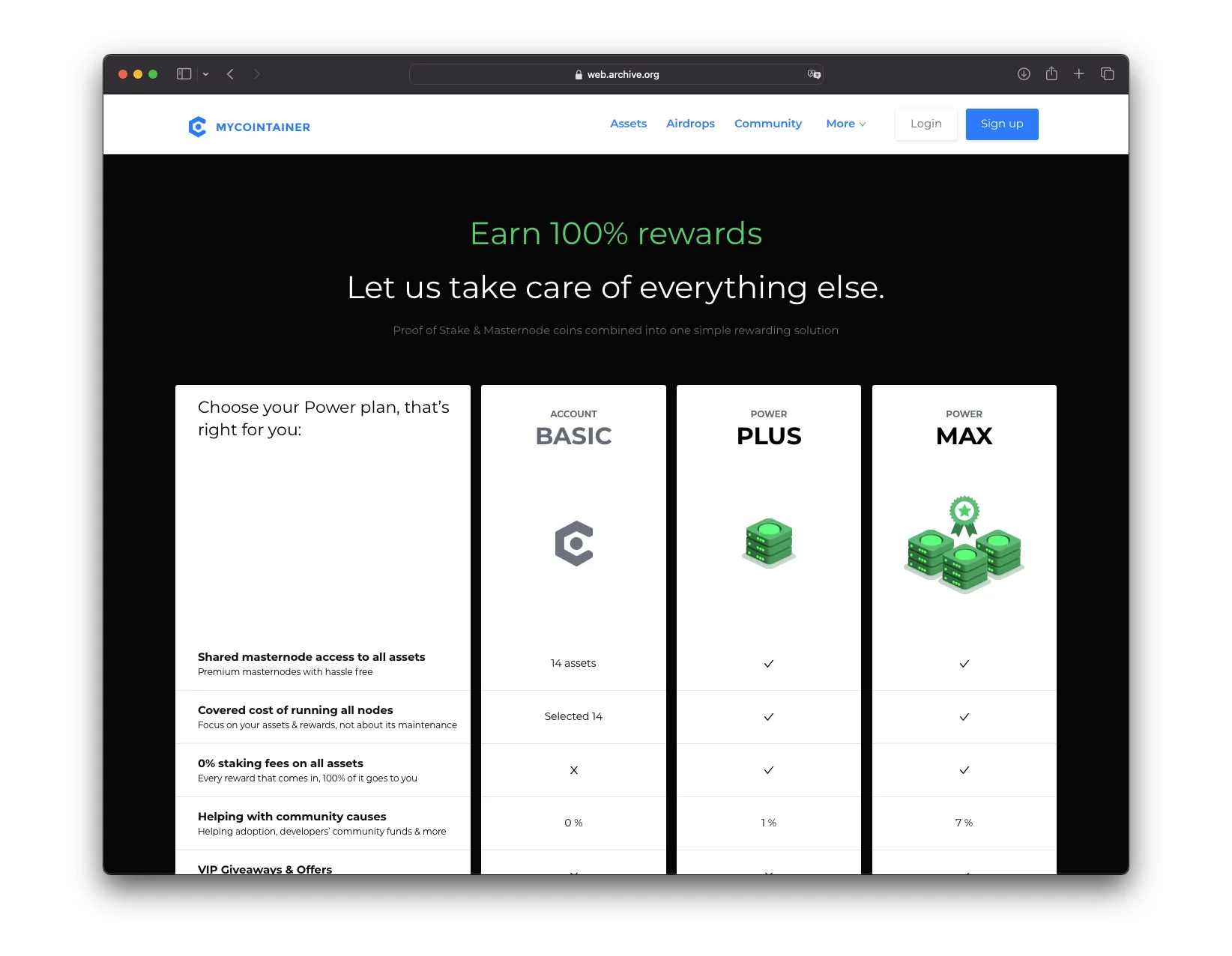 The POWER page in 2020: subscribers kept 100% of their rewards.
Around the same time, an airdrops page gave users more ways to earn. It listed coins other projects gave away to their holders.
By spring 2020, the platform supported 59 coins, and partners included Cardano and Solana. Users without POWER kept paying the commission. The landing page from that time still led with the model we started from.
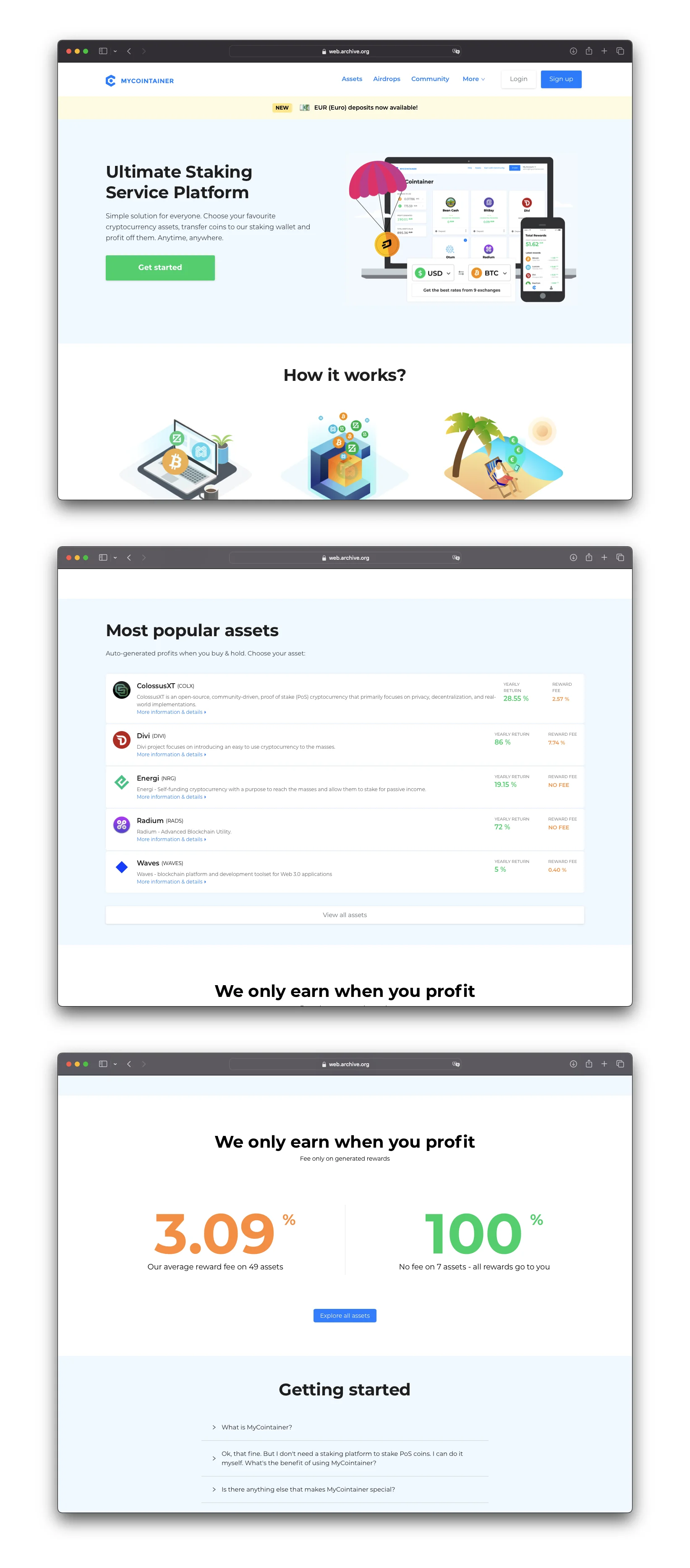 The landing page in spring 2020: a fee only on generated rewards.
A Side Project Became a Second Job
The product kept growing, and so did the work. In April 2020, I couldn't focus for days, and I told Bartosz I wanted to leave: "We started this as a side project. Now it's starting to look like a second job."
The handover took about two more months. I wrote the docs, named my successor and kept helping the team.
The Stack Aged, the Relationship Didn't
Looking back, most of what we solved by hand then comes as a default now. Our public coin pages, for one, were static files that someone edited by hand for every new coin.
Our Express and Mongo setup looked fine back then and looks too basic today. If I built it again, I'd start with a single Next.js app. Marketing pages would be static. The dashboard would sit behind auth and run client-side only. Next.js API routes would handle the backend, on a database, probably Postgres. Background Node.js jobs would run around the clock, syncing what needs syncing.
It's an easy setup and great for an MVP. The hard part is splitting the modules inside that one repo correctly, so any of them can become its own service on demand, without rewriting the whole app.
The working relationship held up better. After I left, Bartosz wrote me a LinkedIn recommendation: "Consistently delivered quality code in great time, very hard working & precise." Four and a half years after I stepped away, he hired me again.
If your idea is pre-team and pre-product, one senior engineer can pick the stack and ship the first version with you. Here's what a 6-week MVP build looks like.
Got thoughts on this? Reply by email.
Jurij Tokarski
I run a solo business and produce software. Usually I'm shipping for clients or building for myself. Sometimes I pause to write about it.