
Jurij Tokarski
Fidder Outgrew Its Telegram Bot
Fidder started as a two-command Telegram bot and made Product Hunt in 2022. The bot is gone. The app it became is the reader I still use.
In early 2022, I was drowning in information. Every day I checked tens of Telegram channels, scrolled through Twitter and managed countless newsletter subscriptions. The fear of missing out was real, and I needed one place to keep up.
Social media went first: too many ads, too many algorithms. RSS readers looked promising, but every one I tried was missing something.
By then, I knew the four things I wanted:
-
A simple list of the RSS feeds I subscribe to
-
Quick updates when new content appears
-
Rich previews, like links on social media
-
No complexity, no clutter
What the market offered fell short in four ways:
-
All-in-one apps with features I'd never use
-
Browser extensions too basic to be useful
-
Apps locked to a single device, with no sync
-
Privacy concerns and forced sign-ups
So I built my own, as small as I could make it.
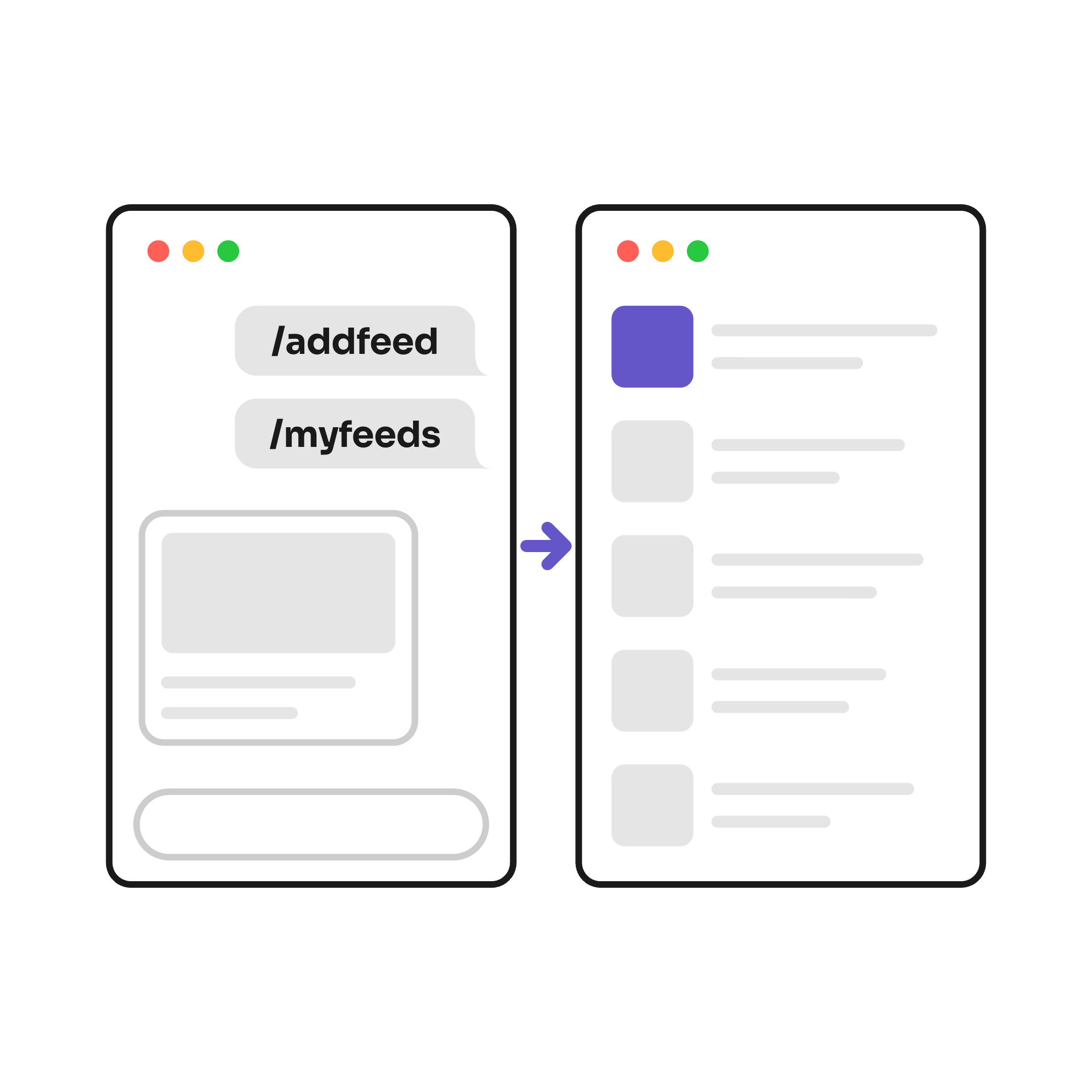
Two Commands on Telegram
That spring, I launched Fidder as a Telegram bot. It had two commands: /addfeed to subscribe to a feed and /myfeeds to manage subscriptions.
The bot ran on Node.js and Telegraf, with Airtable as its database. These are the screenshots I prepared for the launch.
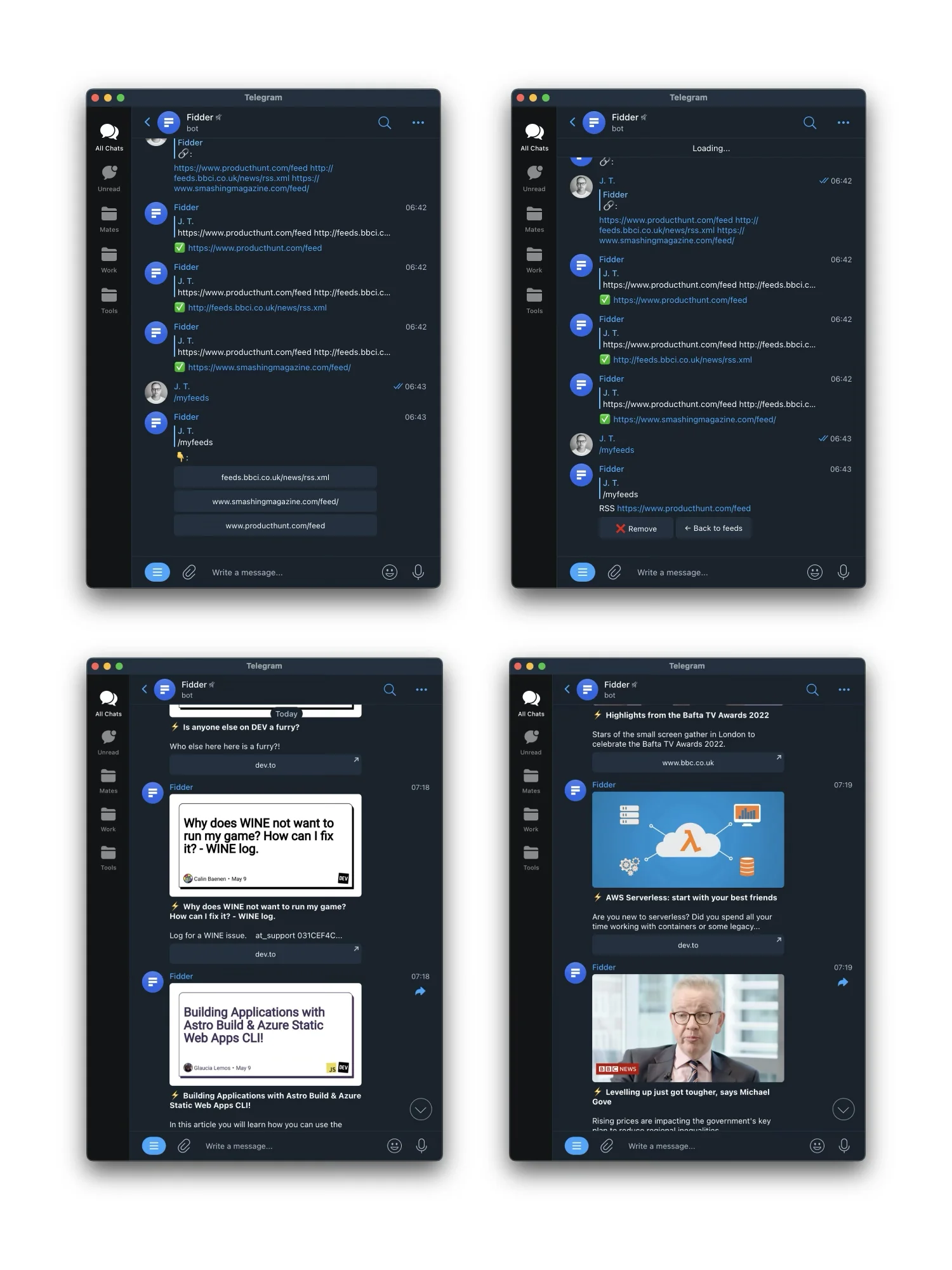 Fidder for Telegram, 2022: paste feed URLs, manage them with /myfeeds, read each new post with a preview.
On launch day, it made Product Hunt with 101 upvotes.
Launch morning had a bug, and it was mine. An || where I meant && made the bot try to send every short post without an image as a photo. I fixed it the same morning.
Fidder made it into RSS directories, and about 150 people started the bot and added at least one feed. Not millions, but enough to validate the idea.
The Reader Moved to the Web
By 2024, Telegram itself had become the limit. I used it less, kept its notifications muted and started missing updates.
In September 2024, Fidder became a Progressive Web App, with no Telegram in between:
The sync needed no sign-in: a one-time code linked each new device. The app ran on React and Firebase, with background workers on a separate server.
This is how that first web version looked, on a phone and on desktop.
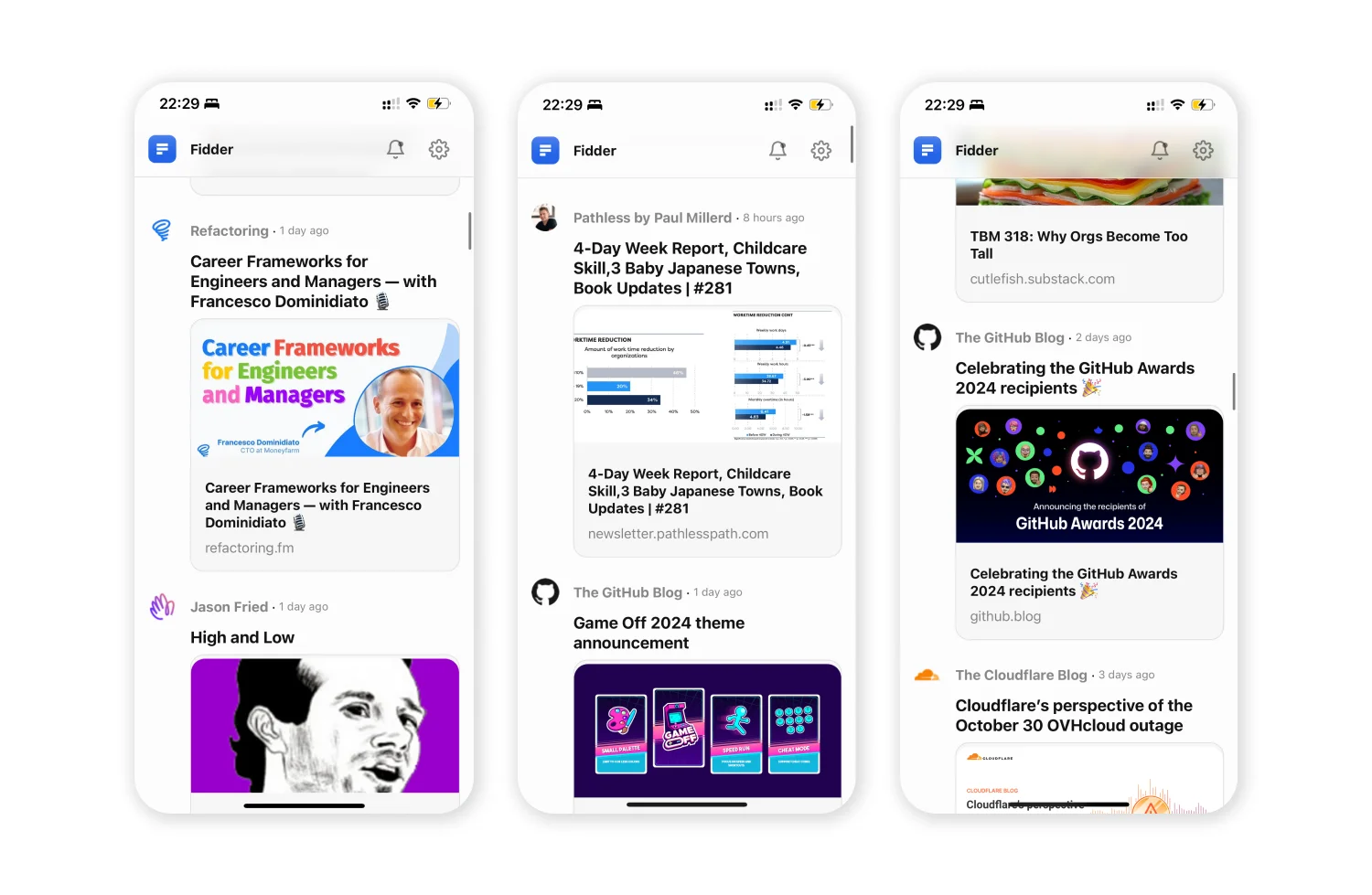 The 2024 web app on a phone: new posts from the sites I follow, each with a preview.
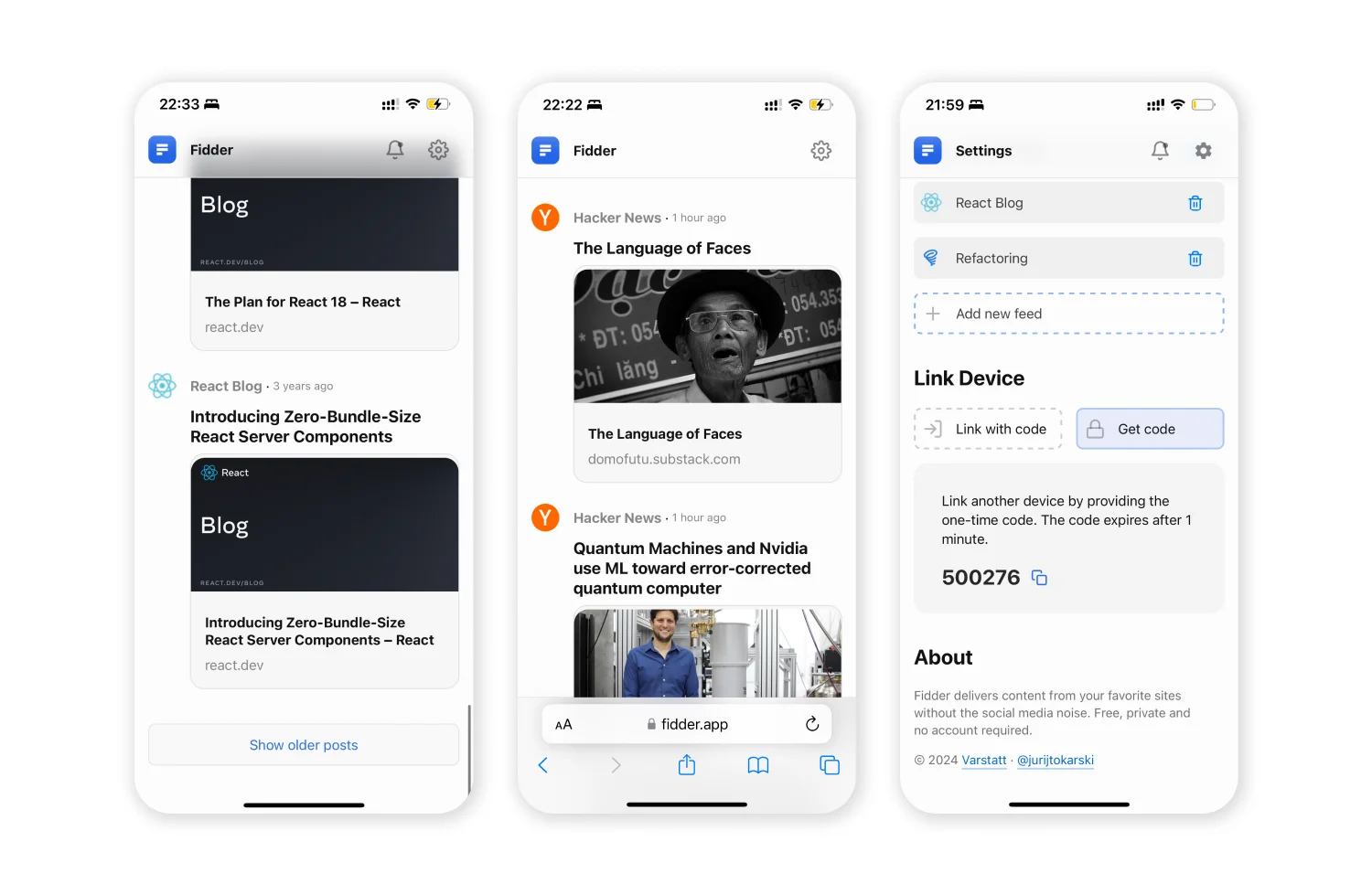 The 2024 web app: older posts, the same app in a phone browser, and the one-time code that linked devices before Google sign-in.
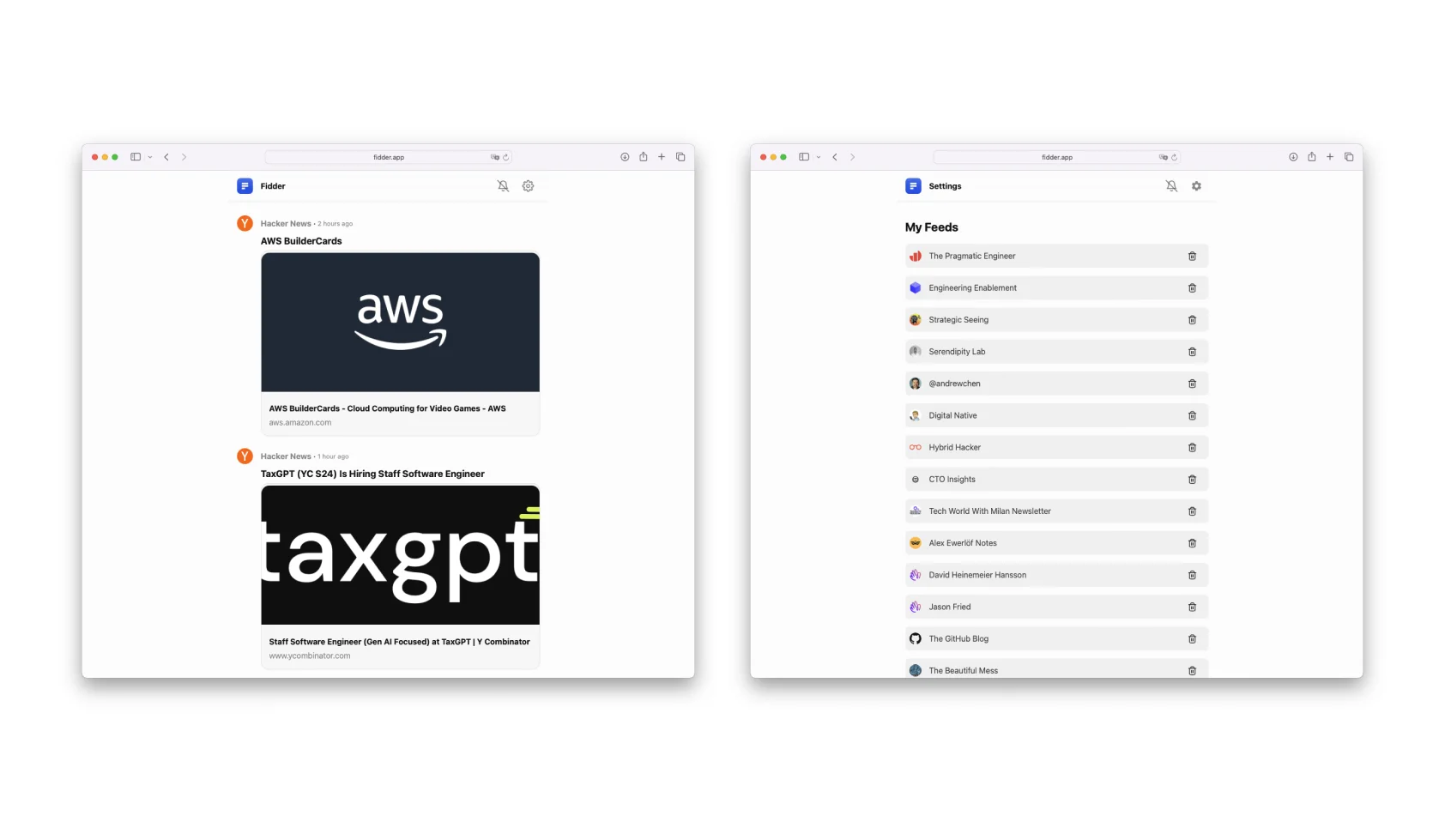 The same version on desktop: the post list, and the sites I follow under My Feeds.
With the web app live, I kept the bot on in maintenance mode. I followed Until the End of the Internet: run as long as the last user needs it.
The App Outlived the Bot
By early 2025, the app cost more than a personal reader should, in money and in upkeep. That spring, I rebuilt it serverless. The background work moved off the separate server into Firebase, and Google sign-in replaced the one-time code.
Sign-in was what I had first set out to avoid. But avoiding it took custom device linking, one of the expensive mistakes. Fidder Overengineering Made Me Pay has the costs and the other three mistakes.
The bot ran until nobody needed it. In 2025, with the web app in its place, I shut it down.
Today fidder.app is my own working tool, a PWA I maintain. It solves my problem, and still does it pretty well.
Follow a Site, Not a Feed
The idea I'd take further is to hide the feed, the way Apple Podcasts does. Podcasts run on RSS, but listeners follow a show and never see a feed URL.
In 2022, the bot asked people to add a feed. Next time, I'd ask them to follow a site.
Got thoughts on this? Reply by email.
Jurij Tokarski
I run a solo business and produce software. Usually I'm shipping for clients or building for myself. Sometimes I pause to write about it.