
Jurij Tokarski
An E-Commerce Request Hid a Supply Chain
About 50 clients, each on its own price, and a packer waiting up to a day for one. The order site became the team's CRM, until they outgrew it.
In December 2022, a business owner brought me a brief. About 50 clients ordered from him by phone and email, and nearly every one paid a price of their own. One sales manager knew those prices and was often on the road.
The packer couldn't ship an order without its price. Each order waited for the manager, anywhere from ten minutes to a whole day. The owner planned for 100 clients the next year, and a new hire would have been lost in the price lists.
He asked for a simple order site, so clients could serve themselves. That request hid a whole supply chain. In the end his team made the site their own, then outgrew it.
Building Beat Configuring
I started with no-code and low-code platforms, hoping for a quick win. None of them held the pricing rules. Basic changes needed premium plans, and the integrations were narrow.
After days of testing, building looked faster than configuring. I chose Next.js for the site, Airtable as the database and back office, and Auth0 for sign-in.
The Prices Were the Hard Part
The store itself was simple: stock levels, a cart and the orders placed so far. It took no payments and had no shipping integration, since the team handled both offline. Each client saw the store at their own prices.
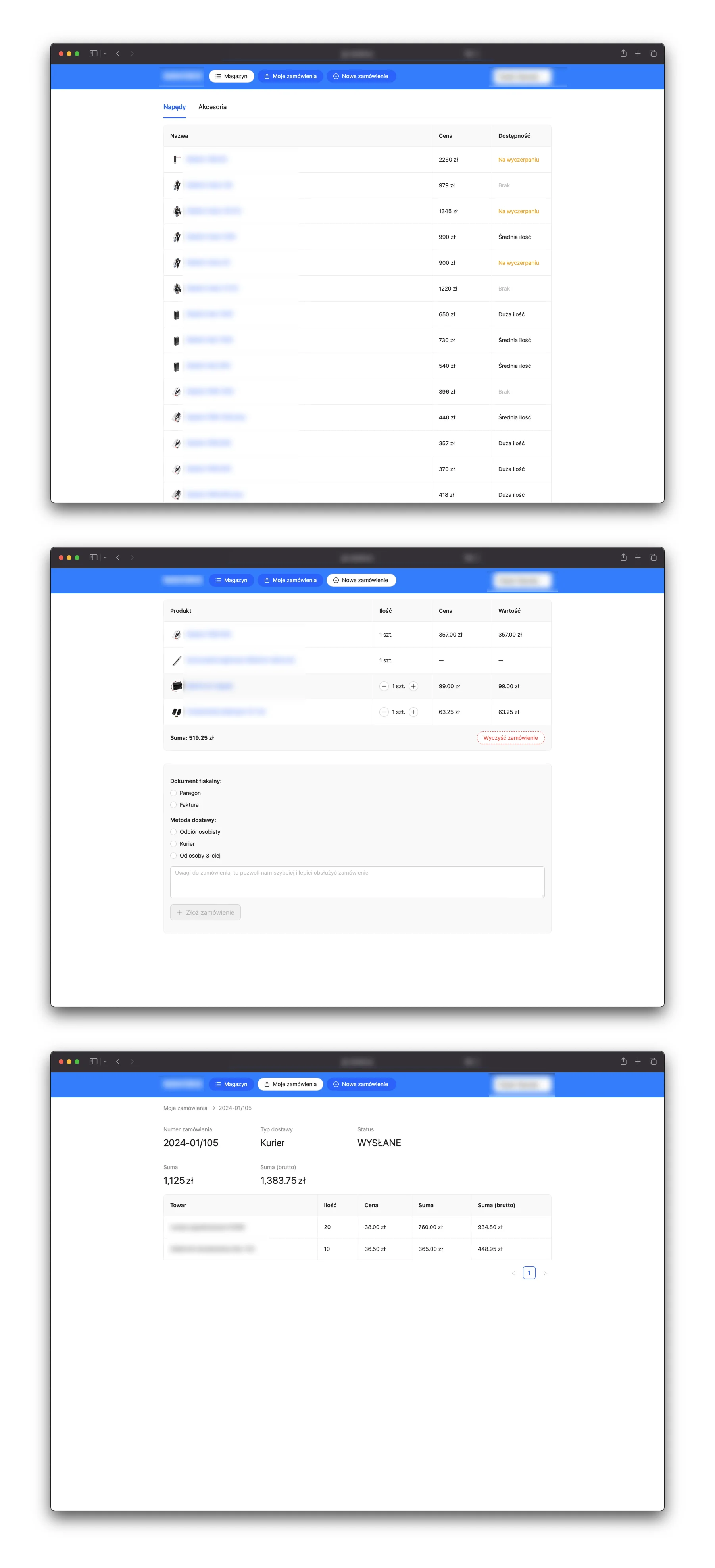 One client's view: stock levels, a new order and past orders, all at that client's prices.
Two price lists set those prices. Each client was on one of them, with custom prices per product on top. Some products sold only in sets, with required choices and a price bump per option.
My first model for those sets lasted a week. I built each set as a separate item, but the owner sold sets whole or split, with choices inside them. So I dropped the separate items and turned each set's choices into options on the main product.
Airtable Became the Back Office
The team, meanwhile, worked in Airtable. Everything after a new order ran there.
I built interfaces for staff to manage products, follow orders by status and edit the site's content without a developer. Reports showed sales by client, by product and by month.
Automations did the rest. They kept stock levels current and emailed each client once an order was packed, with the delivery document and the invoice attached.
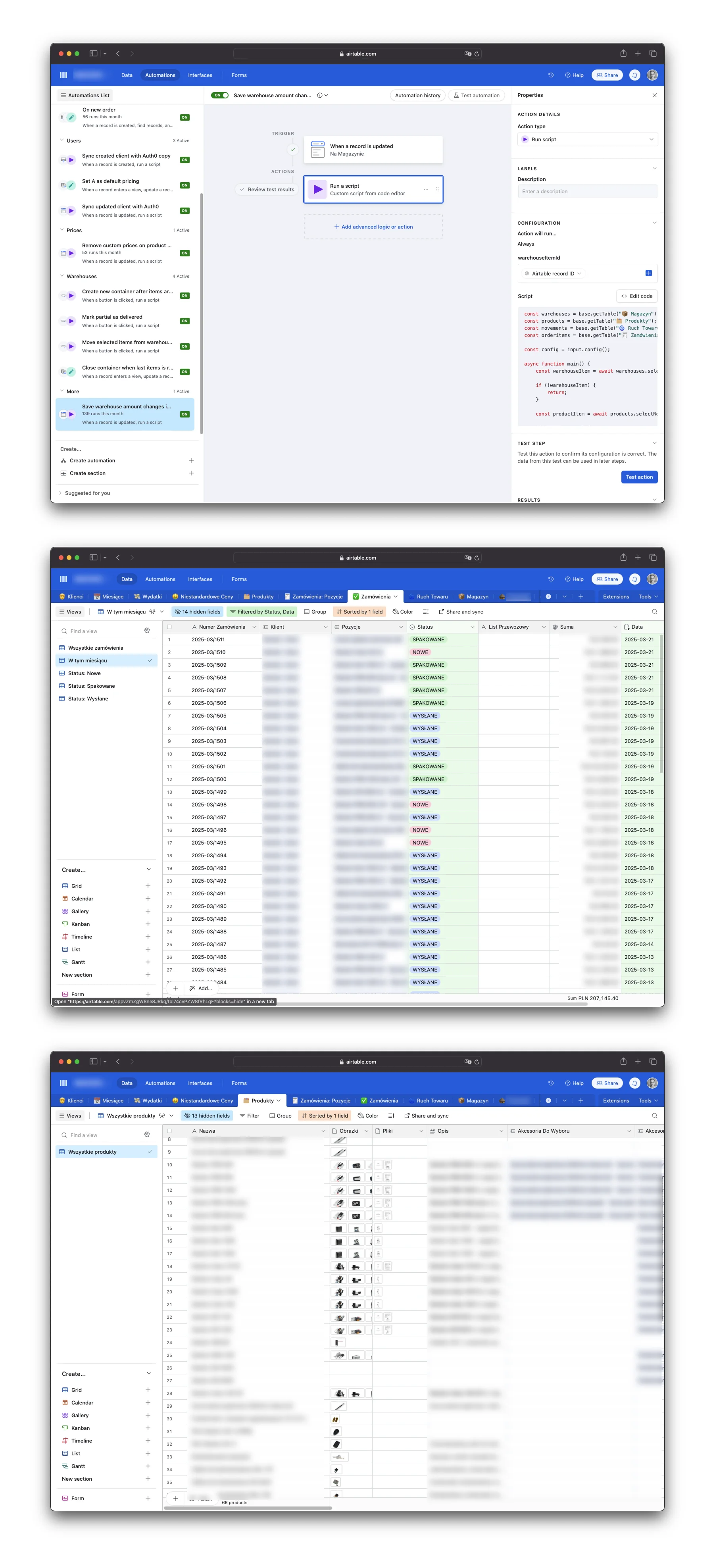 Behind the store: Airtable automations, orders by status and the product table.
The project looked done, and I was ready to wrap it up.
Stock Started Before the Warehouse
The owner brought one more question to what should have been the last meeting. Could goods enter the system before they reached the warehouse? That question showed the supply chain the request had hidden.
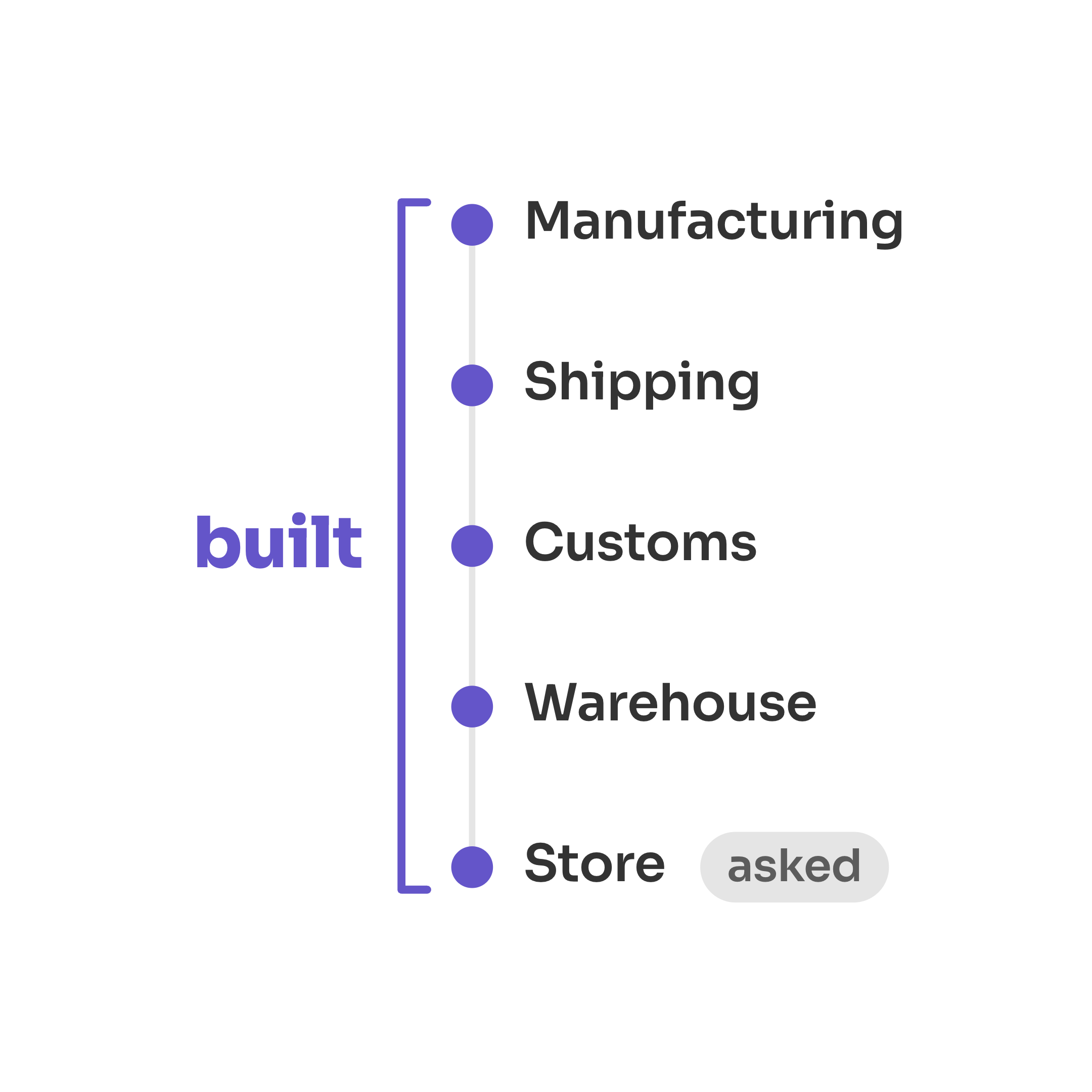
Every product passed four stages before a client could order it, and the system now tracked each one:
- Manufacturing: ordered, not yet made.
- Shipping: on the way, with the transport cost added to the product cost by weight.
- Customs: cleared, with the taxes calculated, but not yet for sale.
- Main warehouse: staff chose what moved here, and only then did it show in the store.
Airtable automations and scripts ran each move. For the first time, the owner could see stock in transit and its full cost at every stage.
Clients Kept Ordering by Phone
One habit didn't change: clients kept ordering by phone. On each call the manager needed the caller's prices, and the system already held them.
So the team used the site and its Airtable back office as their internal CRM. It kept each client's prices, orders and sales in one place.
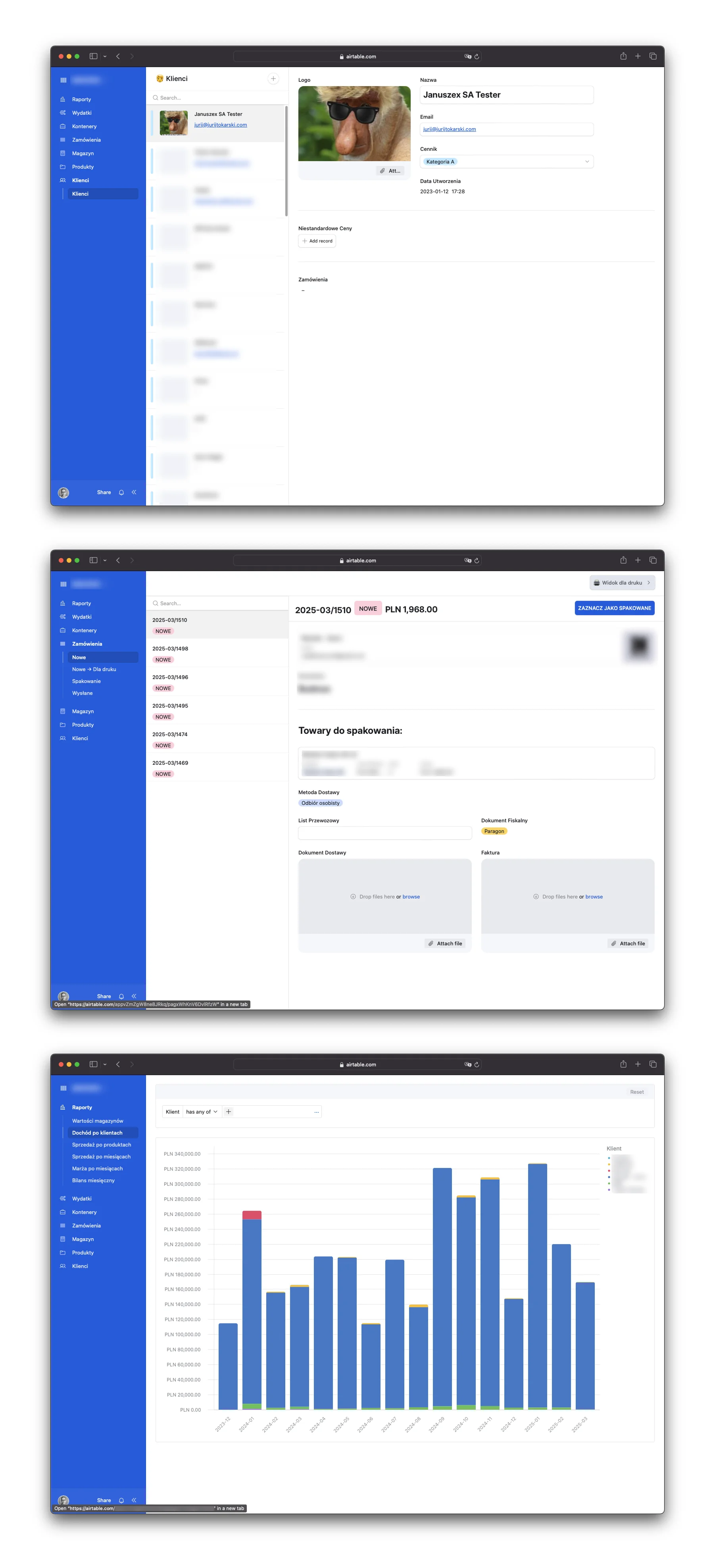 The team's CRM in Airtable: each client's price list, orders to pack, sales by client.
Then the owner asked for one login that could order for any client at that client's prices. I built it as an order-as-client view. The manager took a call, opened the caller's view and placed the order at the right price.
The order landed in the back office with its price on it, and the packer shipped it without waiting for anyone. That was the brief's goal, and the site met it.
The Team Outgrew the Site
The site ran for three and a half years. It handled nearly 2,500 orders from about 80 clients, up from the 50 in the brief, worth millions of złoty. Clients and the manager ordered at the right prices, stock moved through its four stages in Airtable, and every packed order emailed its documents to the client.
The operation kept growing, and an internal CRM built on an order site was no longer enough. In the end, the owner told me the team had moved to a full CRM. They had copied the data they needed, and I could switch the site off. This is what I call a graduation.
The brief named the right pain, a packer waiting on a price, and pictured clients ordering for themselves. It hid two things: the supply chain before the warehouse, and the site's main users, the manager and the packer.
Briefs rarely name either. Both show up when someone asks who does the work, day to day, from the first step to the last. Two discovery tools pin that down before I write code: Lean Canvas and User Personas.
Got thoughts on this? Reply by email.
Jurij Tokarski
I run a solo business and produce software. Usually I'm shipping for clients or building for myself. Sometimes I pause to write about it.