Chapter 03 · 6 principles
Diligence
Software evolves or dies — quality and discipline keep it alive.
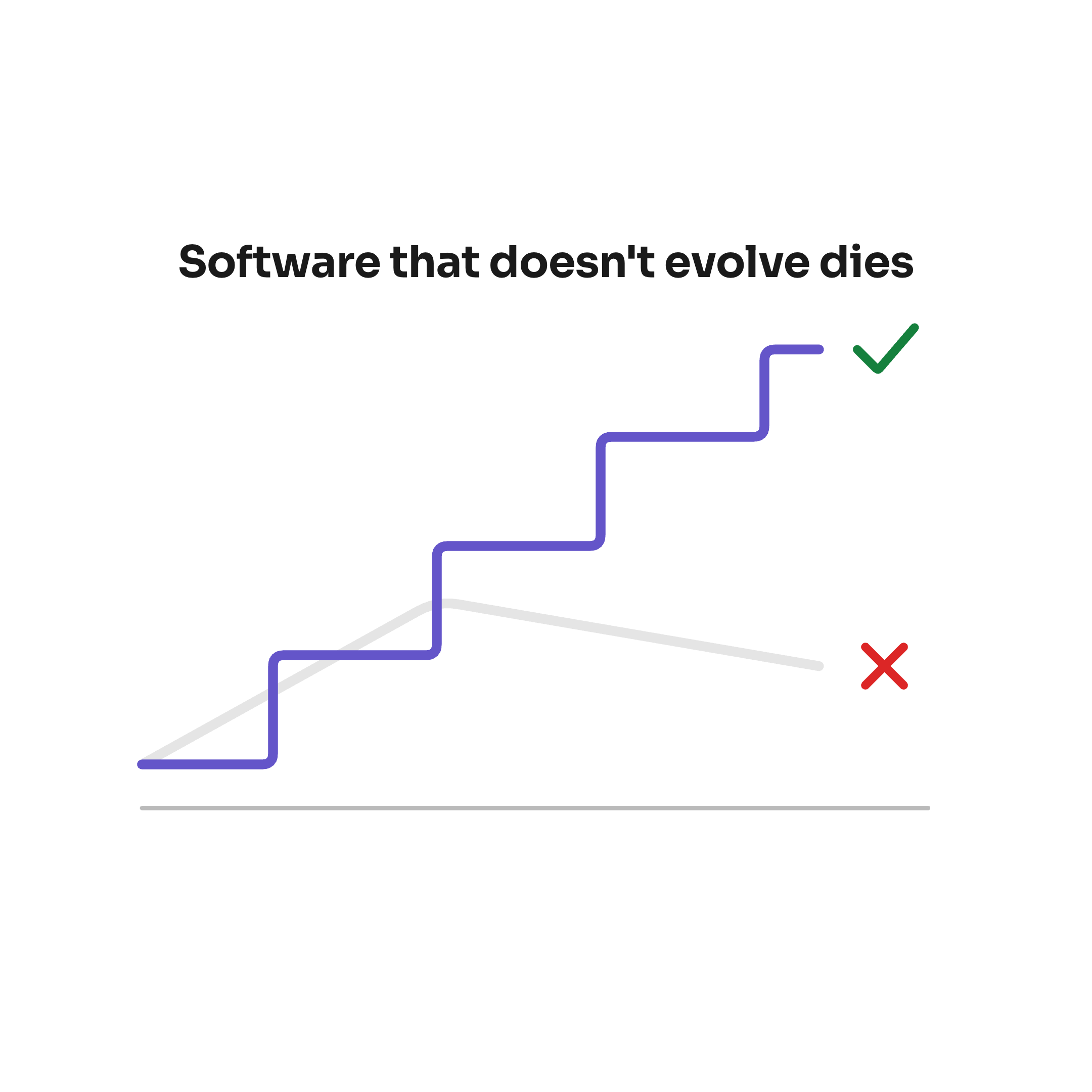
The biggest lie in software is "we're done building, now we maintain it." There's no such thing. Software evolves or it dies.
The developer ships a feature, watches how people actually use it, fixes what breaks, improves based on what they learn, and adds what the reality demands. That's not a build phase followed by a maintenance phase. That's just development — continuous, grounded in what's actually happening instead of what anyone assumed six months ago.
The difference between "active development" and "maintenance" is velocity, not nature. Some weeks the developer ships something significant. Other weeks it's an edge case three users hit on a Tuesday. It's all the same work.
Monitor From Day One
Monitoring isn't something to bolt on after launch. Analytics, error tracking, and alerts belong in the initial build. Waiting until after the first deploy to ask "is this working?" means losing the window to catch the first wave of real-world problems.
The developer needs to know: Is it working? Are people actually using it? Where do they get stuck? What falls apart under real load? Those questions can't be answered without instrumentation that was there from the start.
Watch What It Actually Does
Observability means watching how the software behaves in the wild — not how anyone thought it would, but how it does. Users do unexpected things. Edge cases surface. Performance bottlenecks appear under load nobody simulated.
Analyze what's happening continuously. Patterns emerge fast when the developer is paying attention. Improve based on those patterns — not a roadmap someone wrote before the product existed.
Pause Instead of Stop
When work naturally slows — waiting on a client decision, only low-priority improvements on deck, a seasonal quiet period — the client pauses the engagement. The client resumes when real work returns.
There's no forced "project end" decision. The relationship continues. The codebase stays familiar. Context doesn't evaporate. The engagement scales to match actual need. That kind of flexibility only works with weekly accountability. Monthly contracts can't bend this way.
What's Ahead
Six principles define what diligence looks like in practice — starting with the fundamental rejection of the build-versus-maintain split, then covering how to instrument, observe, sustain the work over time, respond to incidents, and document decisions.
No Split
Start hereDevelopment and maintenance aren't separate phases.Monitor Day One
Observability starts from the very first deploy.Observe and Improve
Real data drives continuous improvement.Pause, Not End
Engagements pause gracefully rather than abruptly end.Incident Response
Stop the bleeding first, then find the root cause.Documentation
Transparent process creates documentation as a side effect.