Chapter 01 · 6 principles
Discovery
Figuring out what's worth building before anyone writes code.
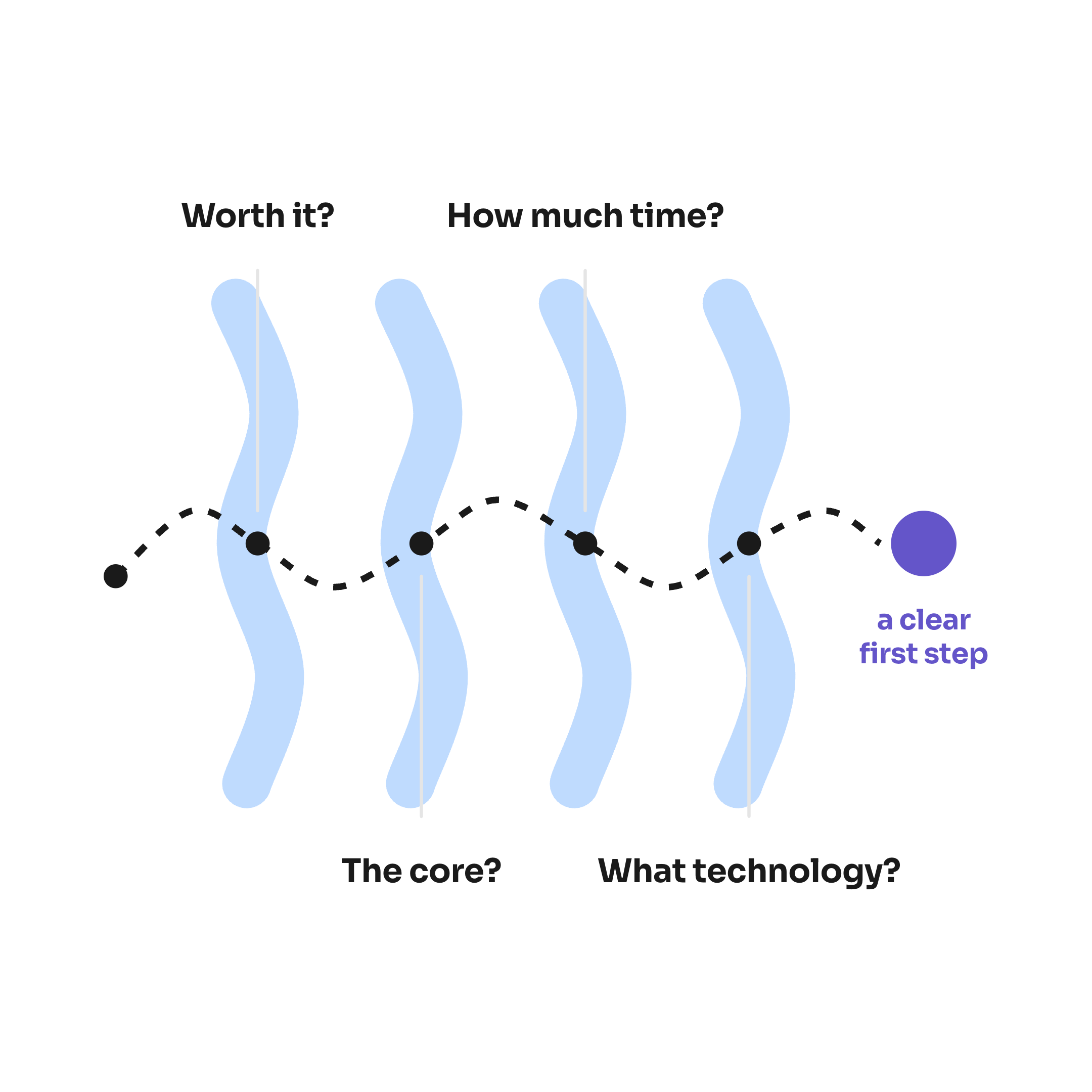
Most founders hire developers before they know what they're building. They describe a vision, the developers nod, and everyone starts. Six weeks later, the thing that got built isn't the thing that was needed. Discovery exists to prevent that.
It's not a big process. It's four questions answered honestly before anyone writes a line of code — plus the discipline to shape scope and say no.
Is This Worth Building?
The client deserves a straight answer here, not encouragement. If there's no validated demand, if the problem doesn't exist the way the client thinks it does, or if the market is misunderstood — the developer says so. The client owns the business risk. The developer's job is to give an accurate picture so the client can decide with open eyes.
What's the Core Feature?
For a new product, it's the one capability that creates unique value — the reason someone would choose this over doing nothing. For an ongoing product, it's the next thing that unlocks the most value. Everything else waits. The core can't be found by listing features. It's found by asking what breaks if it's removed.
How Much Time Is This Worth?
Appetite replaces estimates here. The question isn't "how long will this take?" — it's "what can the developer deliver in six weeks that's actually useful?" Time-box first, then fit the scope inside it. This produces a real constraint instead of a prediction that's wrong by the time anyone reads it.
What Technology Fits?
The right technology is the one that fits the client's situation. Existing infrastructure, credits on a platform, a team already running something — that matters. Fewer services means less maintenance. Developer preferences don't enter into it.
What's Ahead
Discovery produces a clear first step, not a complete roadmap. Roadmaps are fiction written in advance. What the client gets instead is an appetite boundary, a defined core, and technology choices grounded in business reality.
Six principles walk through Discovery step by step — starting with whether the idea is worth pursuing at all, narrowing down to the core feature, setting time boundaries, shaping scope to fit the appetite, making pragmatic technology choices, and having the discipline to say no when it's not the right fit.
Worth Building
Start hereMost things aren't worth building — figure that out first.Find the Core
The essential capability gets built first — everything else waits.Appetite, Not Estimates
Time boxes replace estimates — fix the budget, flex the scope.Scope Shaping
Fixed time, flexible features.Context Over Purity
Pragmatic decisions beat perfect theory.Saying No
Not every project deserves the code.