Discovery · Principle 6 of 33
Saying No
Not every project deserves the code.
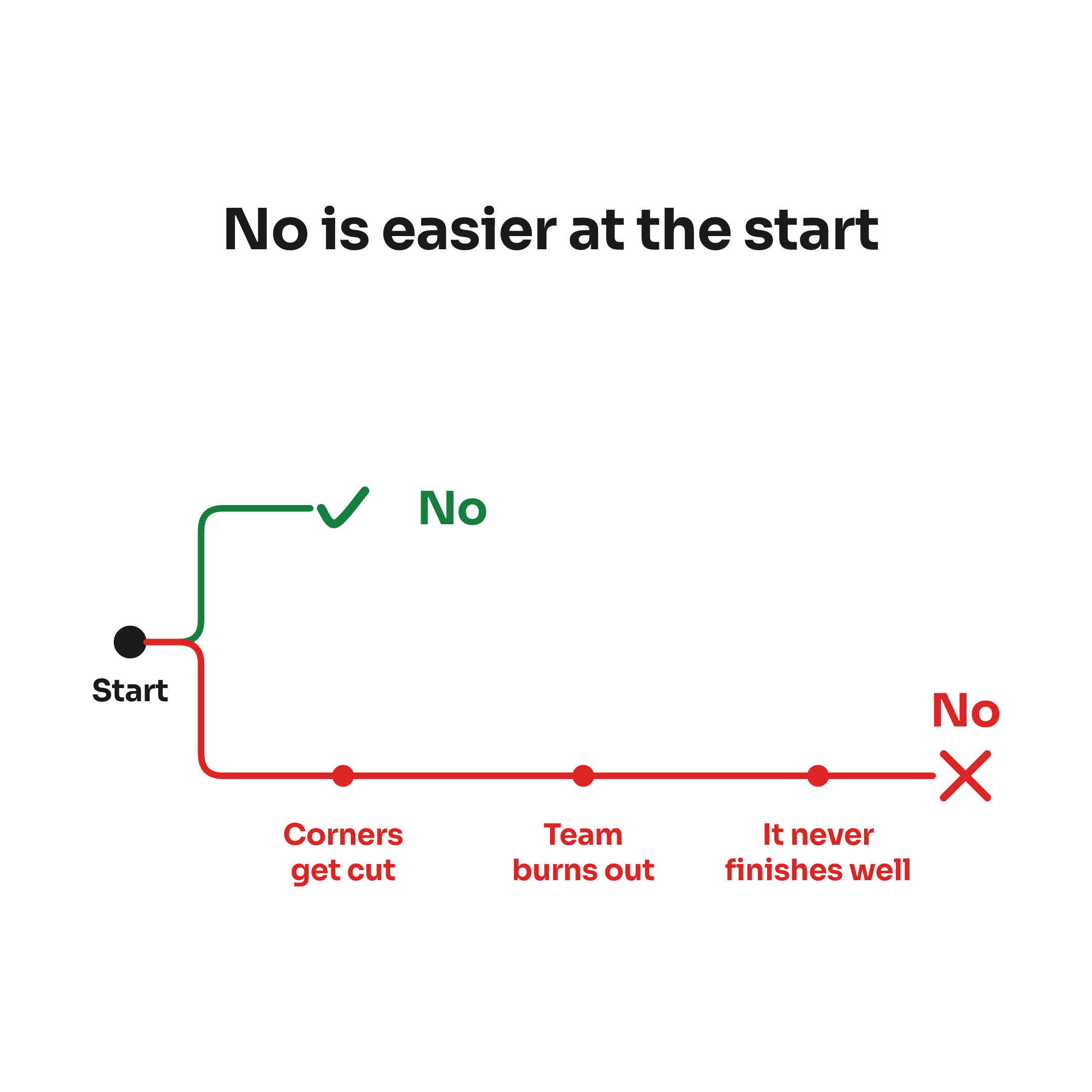
Every developer needs a line. Not a vague sense of discomfort — an actual filter. Projects that cross it get declined. No negotiation, no "just this once."
Define the Filter
The filter is personal. It reflects what the developer believes about the work they put into the world. Some won't build surveillance tools. Some won't work with industries they find exploitative. Some draw the line at dark patterns designed to manipulate users.
The specifics don't matter as much as having them. Without a clear filter, every questionable project becomes a debate — and when money's tight, the debate always ends the same way.
In Varstatt, the filter is straightforward: the work must contribute to humanity, or at least not hurt it. Projects that play on people's weaknesses — gambling, exploitation, manipulation — get declined. Period.
When It Actually Gets Hard
This sounds obvious until savings are running low and a well-paying project lands in the inbox. An escort directory with a polished PRD. A fantasy sports gambling platform with a tight deadline and real budget. The brief looks professional. The money looks good. The need feels real.
Say no anyway.
The moment the developer takes work out of desperation, they've already lost. They'll resent the project. They'll cut corners on principles. And it never finishes well. Never.
How to Decline
The how matters less than the doing. Keep it short. Keep it professional. Don't preach. Don't explain the moral framework. Just decline.
"Thanks for sharing the detailed requirements. After reviewing everything, this project isn't the right fit. If there are other ventures in the future, feel free to reach out."
No sermon. No bridge burned. Door open for different work.
The clients the developer says no to aren't their clients. The projects that conflict with how the work gets done will drain worse than an empty bank account. These principles aren't a luxury affordable only when business is good. They're the foundation that makes good business possible.
Say no early. Say no clearly. Say no when it hurts.
Next: Delivery
Do I Need a Prototype Before an MVP?
Every developer names a different first step: proof of concept, prototype or MVP. The riskiest unknown picks it, and most ideas start with no code at all.Full answer·6 min readWhat If My Developer Doesn't Work Out?
Months in, the work is slow and maybe wrong. Stopping costs what isn't in your name: with the code, the accounts and weekly billing yours, it costs days.Full answer·7 min readWill Adding AI Make My Product Better?
Investors ask for an AI story, so the plan is a chatbot and an agent. AI adds value only on top of what you know; anyone can call the same model.Full answer·7 min read