Delivery · Principle 8 of 33
WIP One
One thing in progress at a time — finish it, deploy it, move on.
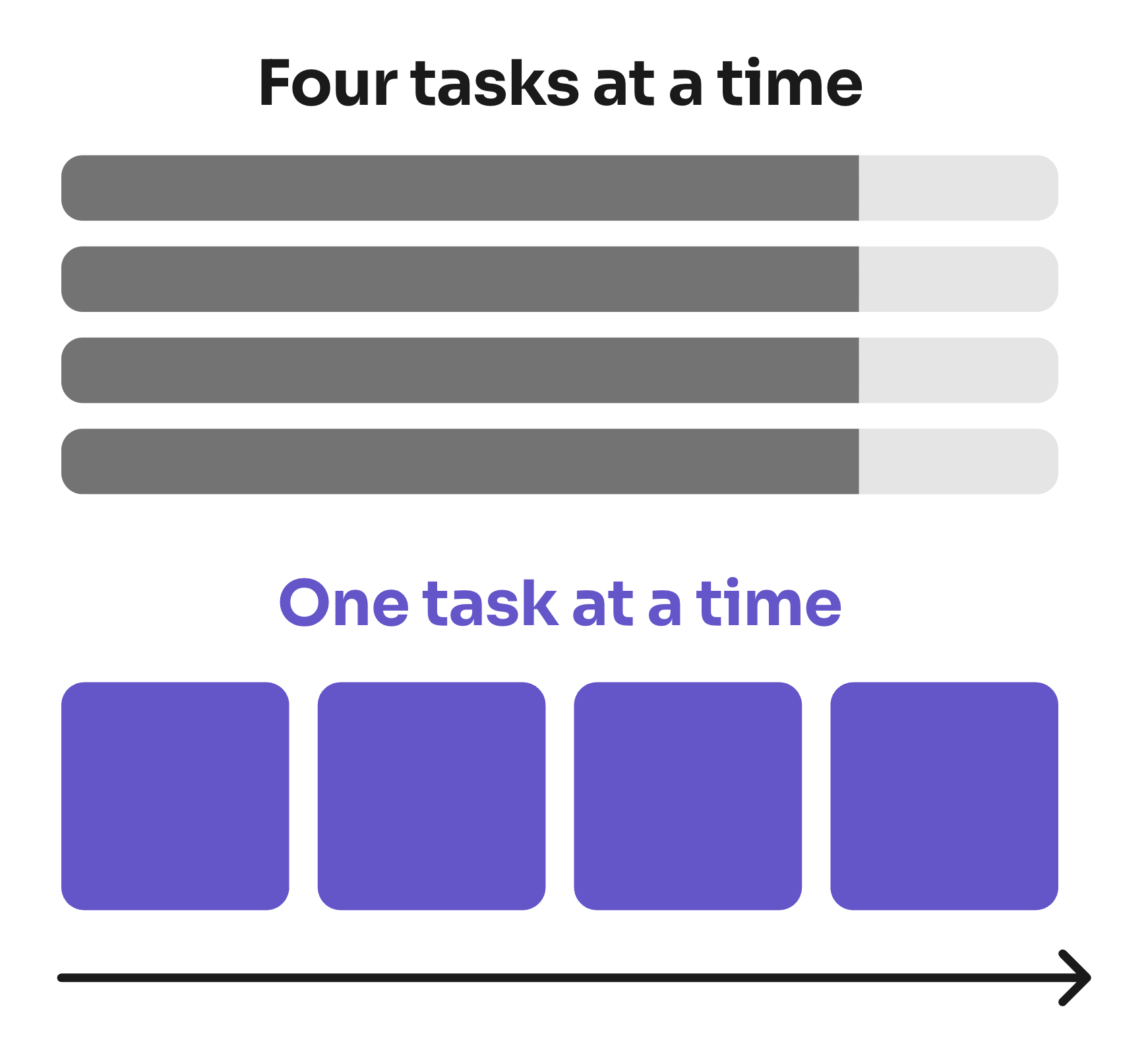
One task in progress at a time. That's the default. It prevents most of the chaos.
How It Works
If the current task isn't done, don't start another one. If priorities shift, stop the current work first. If the client needs something urgent, pause current work and start the urgent task.
Can the developer work on two things at once? Sure — at their own risk. Without solid CI/CD and clean branching, two in-progress tasks turn into merge conflicts, half-finished features, and context that doesn't fit back together. Most of the time, it's not worth it.
Blocked Is Not In Progress
When a task can't move forward — waiting on client feedback, a third-party dependency, an external approval — it's blocked. Mark it as blocked, document what it's waiting on, and move to the next task. That's normal workflow, not an exception.
The key distinction: blocked means parked, not abandoned. The developer checks regularly whether the blocker has cleared. When it does, the blocked task takes priority over whatever else is queued — unless something is already in progress, in which case finish that first.
This keeps the board honest. "In progress" means someone is actively working on it right now. "Blocked" means it's waiting on something specific. No ambiguity.
Why Developers Resist It
"These tasks are related, I can work on both." Related isn't the same as identical. Finish one, then start the other.
"I'm more productive when I switch tasks after hitting a wall." That's context switching dressed up as productivity. Maintaining two mental models simultaneously is slower, not faster. The developer isn't beating the system — they're fooling themselves.
Why Clients Love It
Every status update becomes clean: "Working on X, it's Y% done, Z is blocked on client feedback." That's useful.
Compare that to: "A is 60% done, B is 30%, C is in review, D is waiting on E." Nobody knows what's happening, including the developer. Progress is invisible. Things fall through cracks.
One thing in progress means one honest answer when someone asks where things stand.
What It Prevents
The "90% done on five things" trap. Nothing shipped, nothing delivering value, just complexity piling up. The client can't use 90% done. Nobody can deploy 90% done.
It also closes the back door on scope creep. Adding something new means first stopping what's current. That forces an honest conversation about priorities instead of quietly absorbing extra work.
Next: Production Is Done
Which Engineering Principles Matter for a Startup?
The ones that let you ship every week: build only what is worth building, fix the budget, flex the scope, and finish one task at a time.Full answer·5 min readWhat a Freelance Web Developer Actually Charges
My actual pricing model, why hourly billing is broken, and what clients should expect when hiring a freelance web developer in 2026.Full answer·6 min read