Diligence · Principle 16 of 33
Monitor Day One
Observability starts from the very first deploy.
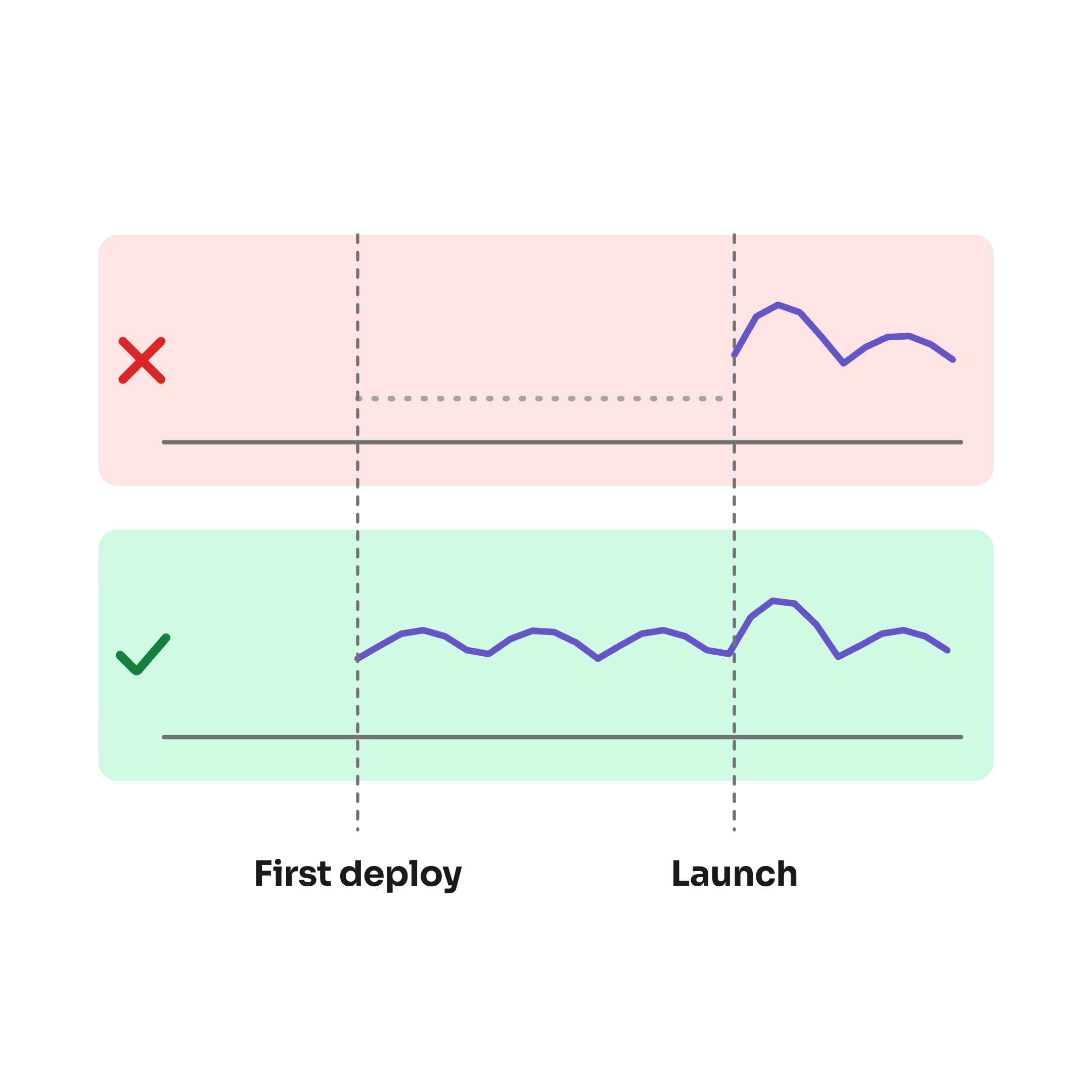
Nobody can fix what they can't see. And without watching from the first deploy, the project starts blind at the worst possible moment.
Observability isn't a polish task. It's infrastructure. Treat it that way.
Don't Wait for Launch
"We'll add monitoring after launch" is how teams spend launch week guessing. That week has the highest traffic, the most edge cases, and the most bugs nobody has seen before. It's exactly when visibility is needed — and exactly when it won't exist if it was deferred.
Set up monitoring during development. Not after. Not when things break. Before the first deploy.
What to Put in Place
Four categories matter from day one:
Error tracking — capture exceptions the moment they happen, not when a user eventually files a complaint.
Uptime monitoring — monitor a simple health check endpoint. The developer should know the service is down before the users do.
Analytics — track the actions that matter: signups, activations, key feature usage. Not everything. The things worth acting on.
Performance tracking — measure response times, database query latency, and API endpoint slowness. A baseline is needed before degradation can be spotted.
In Varstatt, that typically means Sentry for error tracking, Google Cloud Logging for infrastructure visibility, and Simple Analytics for usage — but the specific tools matter less than having them from the first deploy.
The Feedback Loop
With monitoring: a spike in errors appears, gets traced to a bad deploy, rolled back or fixed, numbers verified back to normal. Done in an hour.
Without monitoring: a user reports something feels wrong. The developer can't reproduce it. Asks for details. The user doesn't remember. The problem persists for days.
Monitoring compresses the gap between "something broke" and "problem solved."
What to Actually Watch
Focus on what's actionable. Too many dashboards become noise everyone learns to ignore.
Watch where users get stuck. Watch what breaks and how often. Watch what's slow. Watch the business numbers — signups, conversions, retention — whatever the product actually lives or dies by.
The Cost Argument
Basic monitoring is often free. Paid tiers run $20–50 a month. One critical bug caught before it reaches users pays for years of that. The ROI isn't complicated.
Next: Observe and Improve