Partnership · Principle 26 of 33
Async First
Async communication protects focus time and respects everyone's calendar.
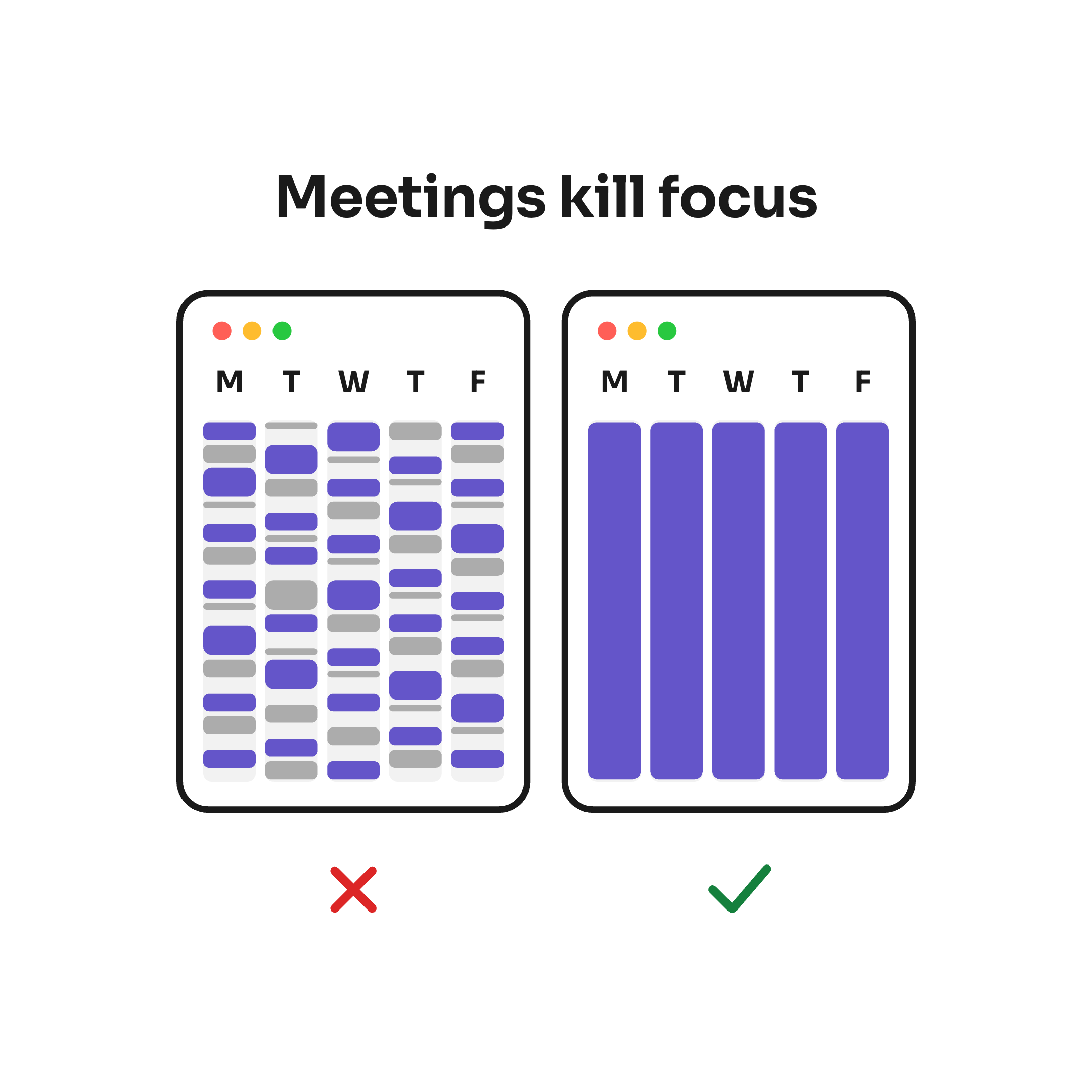
Meetings are a last resort, not a default. This isn't about introversion or avoiding people — it's about protecting the conditions that make good work possible.
Why Async Shapes the Partnership
Async-first means defaulting to writing, and treating synchronous time as a scarce resource. This sets the tone for the entire relationship: trust over surveillance, results over presence, written records over half-remembered conversations.
It also means no one's calendar dictates the pace of work. The developer works when they're sharpest. The client reviews when it's convenient. Nobody waits on the other to "be available."
When to Actually Meet
Some things are genuinely better live. Strategic decisions where multiple paths are on the table. Complex requirements that are easier to walk through than describe. Major pivots that affect the whole direction of the work. Occasional check-ins to make sure the relationship is solid.
These are exceptions. Treat them that way. Tactical work doesn't need a meeting. "Built the feature, here's how it works, let me know if it needs adjustments" is a message, not a calendar invite.
What Disappears
Daily standups go away — everything they surface is already in the task board. Sprint planning meetings go away — no sprints, no planning ceremonies. Status meetings go away — status is always visible. The "quick sync" that somehow eats 45 minutes and produces nothing goes away.
All the process theater that makes developers hate agile disappears.
The Math
The average developer loses 11 hours a week to meetings and gets maybe 20 hours of real focus time. Flip the default and that becomes 1-2 meeting hours and 38+ hours of uninterrupted work. That's not a marginal gain. That's doubling productive capacity without hiring anyone.
Calendar creep is a productivity killer. "Quick syncs" that run 30 minutes. Half the day in meetings, the other half recovering from them. Context switching compounds the damage — the developer is deep in a problem, a meeting interrupts, and it takes 20 minutes to get back. Do that five times a day and nothing gets built.
Handling the "I Need You Available" Client
The developer is available. An async message gets a response within a few hours. For real emergencies, there's a direct channel. But "emergency" means production down, data loss, or a security breach — not a new feature idea that just came to mind. The right clients understand this. The ones who can't adapt are telling the developer something useful about whether the relationship will work.
In Varstatt, that means Slack for day-to-day communication and a shared phone number for genuine emergencies.
That's a filter. A good one.
Next: Exit Freedom