Partnership · Principle 27 of 33
Exit Freedom
Clients can leave at any time — no lock-in, no hard feelings.
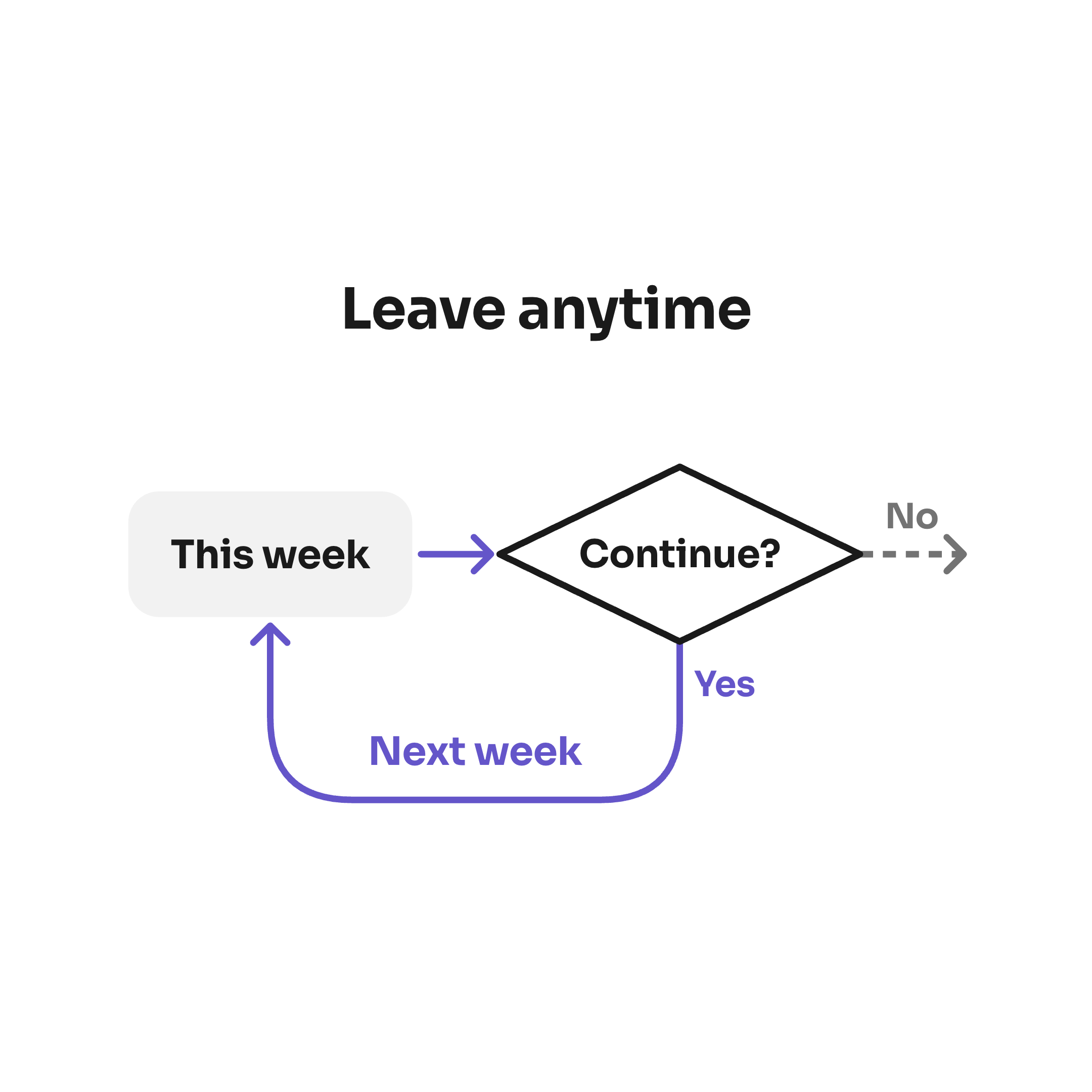
The best accountability mechanism is easy cancellation. Not contracts. Not milestones. Not quarterly reviews. Just: the client can leave whenever they want.
Why Easy Exit Matters
No penalty clauses. No notice period. No awkward conversation about "winding down." The code, documentation, and task board belong to the client — full ownership from day one. Nothing is held hostage. There's nothing to "hand off" because there's nothing the developer is holding.
Short billing cycles make this mechanically simple. The shorter the cycle, the more natural exit points. The client is never far from a clean stop.
The Confidence Filter
A developer who isn't confident in their work finds easy cancellation frightening. The client could leave anytime. No contract to hide behind, no sunk cost keeping the client locked in. But that fear is telling — the developer isn't sure they're delivering value. The fix isn't a better contract. It's better work.
For confident developers, it's liberating. Ship working software. Solve real problems. The client stays. That's the whole loop. No relationship management theater. No convincing stakeholders the work matters. Just a direct signal: if work quality drops, the client cancels. Adjust or move on. Clean feedback.
What It Prevents
Resentment buildup. The client feels trapped, the developer feels obligated to underperform, the relationship sours. Nobody wins. Easy exit short-circuits all of that. If it's not working, end it cleanly. No bad feelings, no forced continuation of something broken.
Graduates, Not Dropouts
Some clients will cancel because they've outgrown the model. They need a bigger team, more capacity, different specialization. Call them graduates. They didn't leave because the developer failed. They left because they succeeded.
Leave the door open. The best former clients come back for new projects, refer others, or return when they need focused execution again. Restarting should be as simple as picking up where things left off. No new proposals. No re-onboarding. The repo is where it was left.
Clean exits require zero effort when ownership was never ambiguous.
At Varstatt
In Varstatt, weekly billing creates four natural exit points every month. Offboarding is a Stripe cancellation. After the subscription cancels, the developer stops producing work. No refunds for paid weeks — but the developer can finish things up or prepare additional materials until the current period expires if the client asks.
Next: Philosophy
Isn't a Solo Developer a Bus Factor of One?
Yes. Fix the handover, not the headcount: access, documentation, history and exit make the next developer's first day cheap.Full answer·2 min readWhich Engineering Principles Matter for a Startup?
The ones that let you ship every week: build only what is worth building, fix the budget, flex the scope, and finish one task at a time.Full answer·5 min readWhat a Freelance Web Developer Actually Charges
My actual pricing model, why hourly billing is broken, and what clients should expect when hiring a freelance web developer in 2026.Full answer·6 min readWhat Happens When a Client Wants to Stop or Pause?
Weekly billing, full client ownership, and no lock-in mean stopping or pausing is mechanically simple and penalty-free.Full answer·2 min readHow Should Non-Technical Founders Evaluate Developers?
You can't fully evaluate a developer before working with them. The goal is to minimize risk until you have enough real data.Full answer·2 min read