Chapter 05 · 6 principles
Philosophy
Fundamental assumptions about what software development is — and isn't.
These aren't practical guidelines dressed up as principles. They're fundamental assumptions about what software development is — and what it isn't.
Software Is a Business Cost
Developers like to think they're craftspeople. Artists. Elite engineers building cathedrals in code. They're not. Software development is an operational cost — like accounting, customer service, or office supplies. Essential? Yes. Special? No.
Clients don't want beautiful code. They want business problems solved at a reasonable price. That mindset shift changes everything: service-oriented instead of ego-driven, predictable instead of creative-on-a-whim, cost-effective instead of technically-interesting-first.
One Platform Beats Many
Every integration point is a failure point. Every API key is a maintenance burden. Every third-party service is another thing to monitor, pay for, and eventually migrate away from. Developers love microservices because they're interesting. Clients suffer the operational complexity.
Platform consolidation is the answer. One platform covering authentication, database, hosting, serverless functions, file storage, and monitoring — one bill, one mental model. Less sophisticated than best-of-breed for each category? Sure. Good enough for most use cases? Absolutely. Fewer services means less integration complexity, less maintenance, and less that can go wrong.
In Varstatt, that platform is Firebase.
Hours Are the Wrong Metric
Time tracking is productivity theater. Hours logged mean nothing on their own. Did the developer solve the problem? Did they ship working software? Did they deliver value? Those are the real questions.
Hourly pricing creates a perverse incentive: work slower, earn more. Work faster, earn less. A fixed weekly rate aligns incentives — deliver value, keep the client happy, and the relationship continues.
The Client Decides When Done
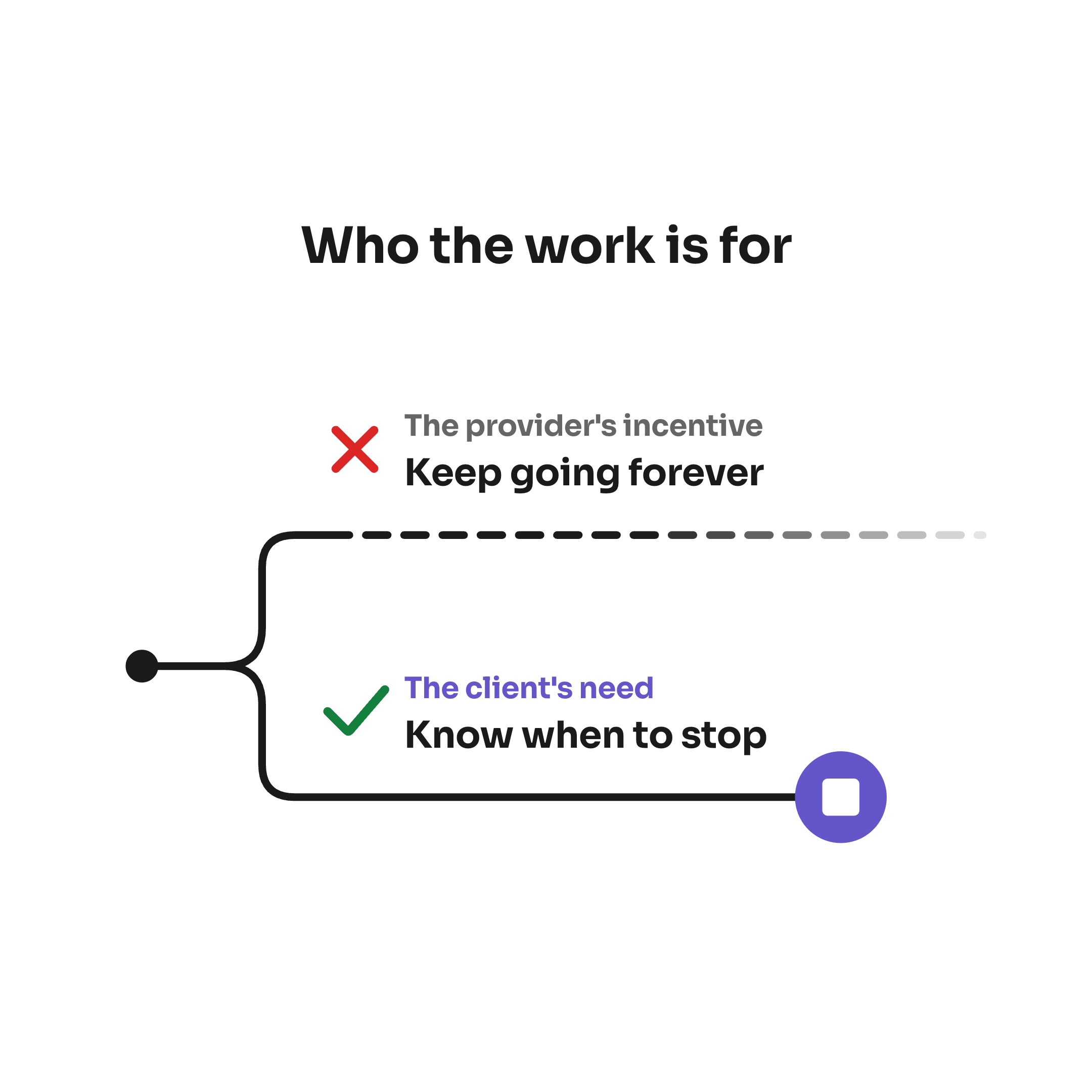
The service provider's incentive is to keep going forever. The client's need is to know when to stop. That tension is real, and pretending otherwise is dishonest.
The client controls the exit. The developer will never tell a client to stop paying — but the client can decide when the value no longer justifies the cost. That's a business decision, not a technical one. Software is never truly "done," but business objectives get met and ROI thresholds get reached. The client decides when that moment is.
What's Ahead
Six principles spell out these beliefs in detail — starting with what software development actually is, then addressing how it should be priced, how systems should be built, who ultimately holds the reins, why the solo model works, and who owns the output.
Business Cost
Start hereSoftware development is an operational expense, not a craft.Hours Are Wrong
Hourly billing misaligns incentives — fixed rates fix it.Consolidation
Fewer tools, vendors, and moving parts make better systems.Client Decides
The client controls when the engagement ends.Solo Developer Model
One developer, full stack, AI-augmented.Client Owns Everything
Zero lock-in by design.