Partnership · Principle 23 of 33
Transparency
Full visibility into progress, problems, and decisions.
The client sees everything. Not as an ideal — as a practice. Full access to the task board, the repository, the documentation, and the ongoing work-in-progress. No staged reveals. No "we'll show you when it's ready."
Full Access, Always
The task board is shared with the client from day one. Current priorities, what's in progress, what's done, and what's coming next — all visible. The code repository belongs to the client — owner access, not view-only. Every commit, every pull request, every comment thread is readable. Documentation lives in shared spaces: design decisions, architecture notes, troubleshooting guides. All of it. All the time.
Regular updates land in task comments or a shared channel. What got done, what's next, what's blocked. The client doesn't have to ask.
Development Is Messy — The Client Will See That
The client will see commits that say "WIP — doesn't work yet." They'll see "trying a different approach" followed by a revert. That's not a problem. That's honest work.
Hiding the mess creates false polish. It feels professional but it's dishonest. The work is messy. Pretending otherwise builds a relationship on performance instead of reality. The client isn't paying for clean commit history. The client is paying for working software.
Problems Surface Early
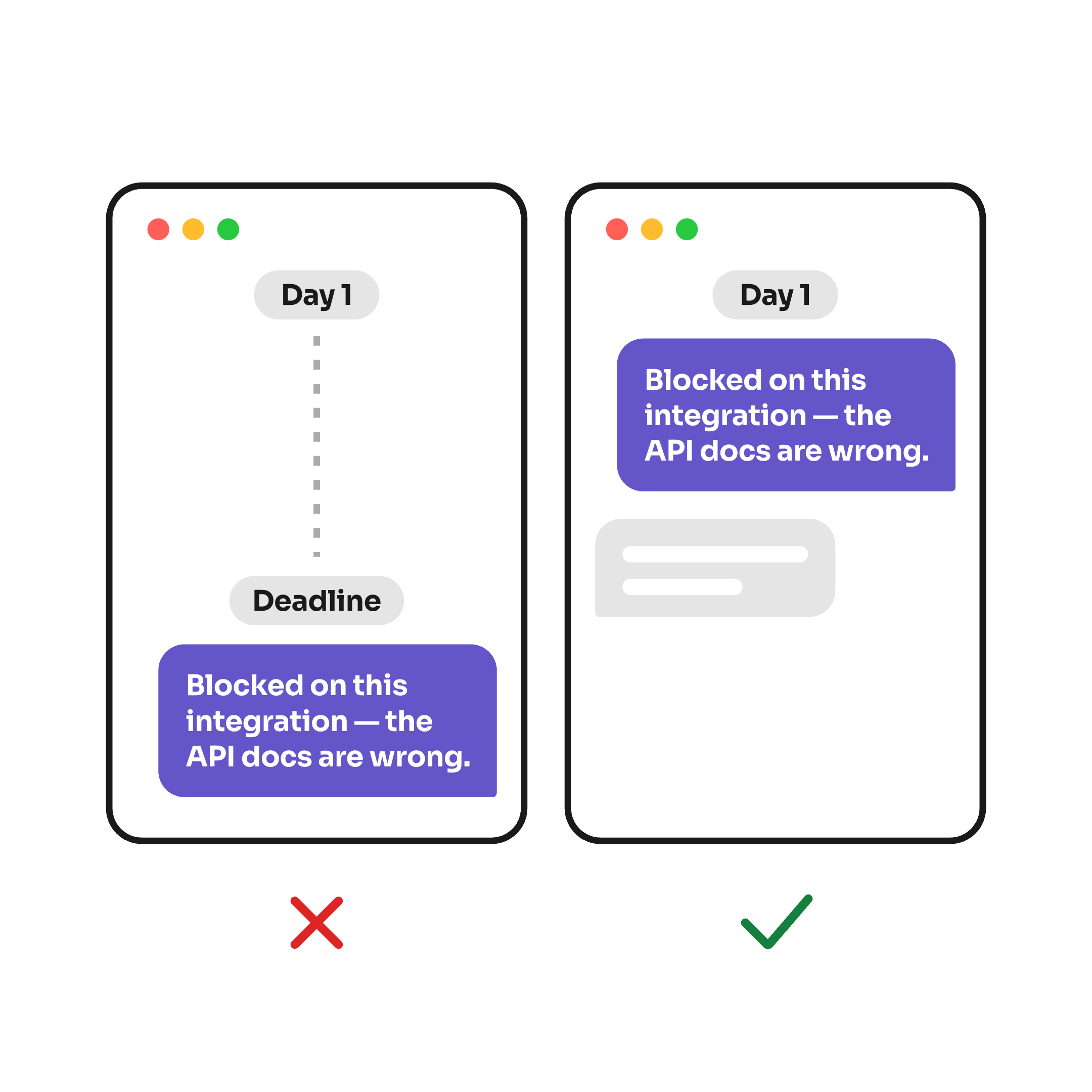
When something's stuck, the client knows immediately. "Blocked on this integration — the API docs are wrong." The client can help, escalate, or adjust expectations. None of those options exist when the problem stays hidden until a deadline.
Decisions are documented in real-time. Six months later, when someone asks why the team went with approach X, the answer is already written down. Context doesn't disappear when people change.
The Status Anxiety Loop
When clients don't know what's happening, they ask. The developer stops to write updates. Less work gets done. The loop repeats.
Transparency breaks the loop. Status is always visible. No one has to ask. The best working relationships are ones where the client can disappear for two weeks, come back, check the board, see clear progress, and trust that things are moving. That only works when there's nothing hidden.
Surprises come from assumptions and opacity. Both die in the light.
Next: Weekly Accountability
Isn't a Solo Developer a Bus Factor of One?
Yes. Fix the handover, not the headcount: access, documentation, history and exit make the next developer's first day cheap.Full answer·2 min readWhich Engineering Principles Matter for a Startup?
The ones that let you ship every week: build only what is worth building, fix the budget, flex the scope, and finish one task at a time.Full answer·5 min readWhat a Freelance Web Developer Actually Charges
My actual pricing model, why hourly billing is broken, and what clients should expect when hiring a freelance web developer in 2026.Full answer·6 min readHow Does Async Collaboration Work Without Daily Meetings?
Async-first communication replaces status meetings with written updates, full transparency, and documentation that builds itself.Full answer·2 min readHow Should Non-Technical Founders Evaluate Developers?
You can't fully evaluate a developer before working with them. The goal is to minimize risk until you have enough real data.Full answer·2 min read