Philosophy · Principle 31 of 33
Client Decides
The client controls when the engagement ends.
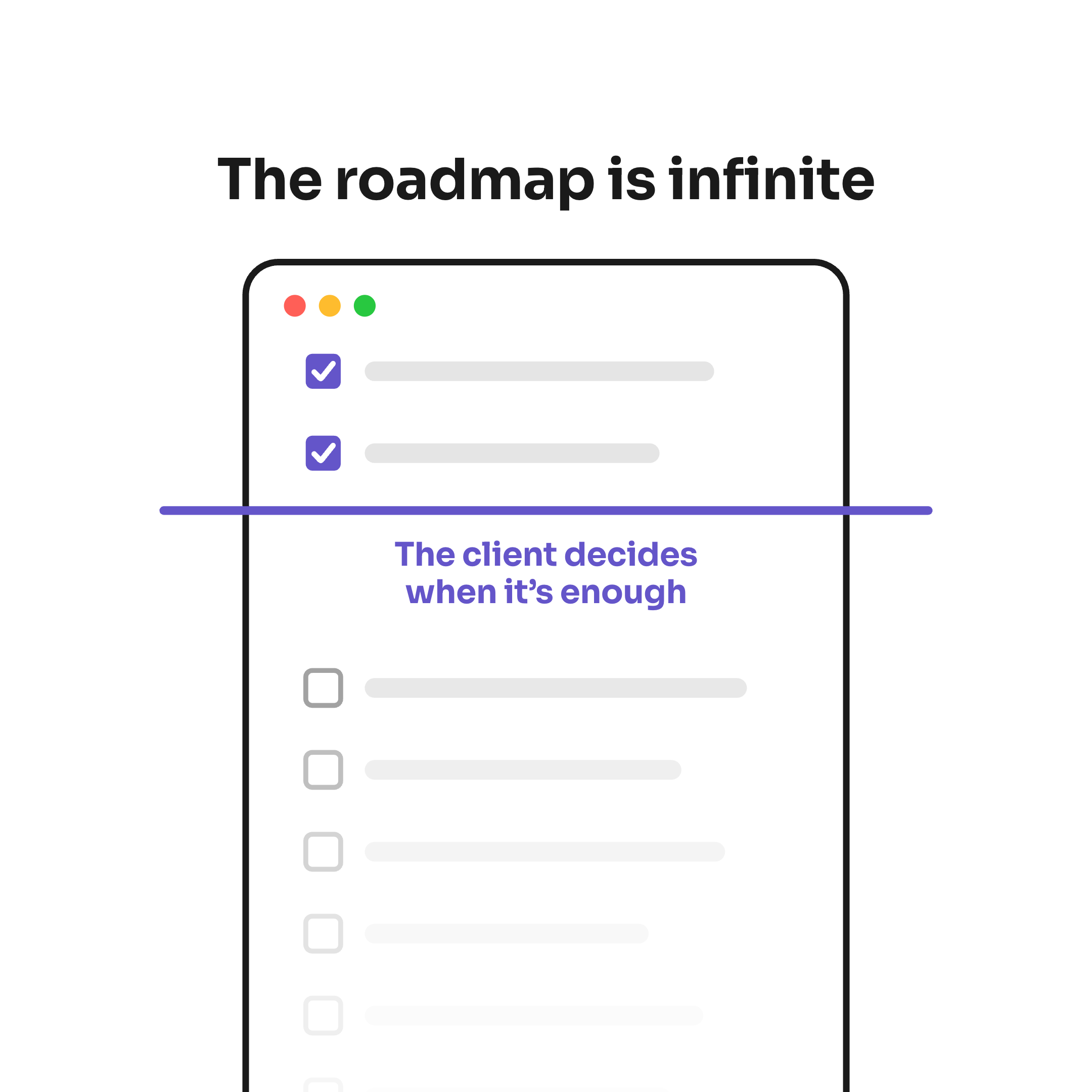
Software is never truly done. There's always another feature to build, another edge case to handle, another thing to improve. But engagements end. The question is: who calls it?
The Incentive Problem
Every service provider wants projects to keep going. That's not cynicism — it's basic economics. More months of work means more revenue. The conflict of interest is obvious, and pretending it doesn't exist is dishonest.
The developer has an incentive to continue. The client has an incentive to optimize spending. That tension is real. Acknowledging it upfront is the only respectful thing to do.
The Client Is in Control
The client decides when the engagement ends. Not contract terms. Not project milestones the developer defines. The client.
The developer keeps going as long as the client finds value in it. The client stops when the cost no longer justifies the return. That's how it should work — it's the client's money, the client's business, the client's call.
Information, Not Decisions
The developer's job is to keep the client informed, not to make the call. "Here's where things stand. Here's what could be added next. Here's what that would cost." The client takes that information and decides whether it's worth it.
Business objectives get met. ROI thresholds get reached. Budgets shift. Priorities change. Those are business decisions, and the client is the one running the business.
What This Prevents
Without client control, the endless project problem emerges. The developer keeps finding "necessary" work. The client keeps paying. Nobody acknowledges when enough is enough.
It also prevents the opposite: the developer deciding the project is done and walking away while the client still has unmet needs. When the client controls the ending, the client controls whether their needs are actually met before it wraps up.
Why This Is a Philosophical Position
Most service models are designed to keep the client locked in. Long-term contracts, high switching costs, proprietary systems the client can't take with them. All of that serves the provider, not the client.
Client control of the exit isn't a pricing detail — it's a statement about who the work is for. If the answer is "the client," then the client decides when it's done. Everything else is just words.
Next: Solo Developer Model