Philosophy · Principle 30 of 33
Consolidation
Fewer tools, vendors, and moving parts make better systems.
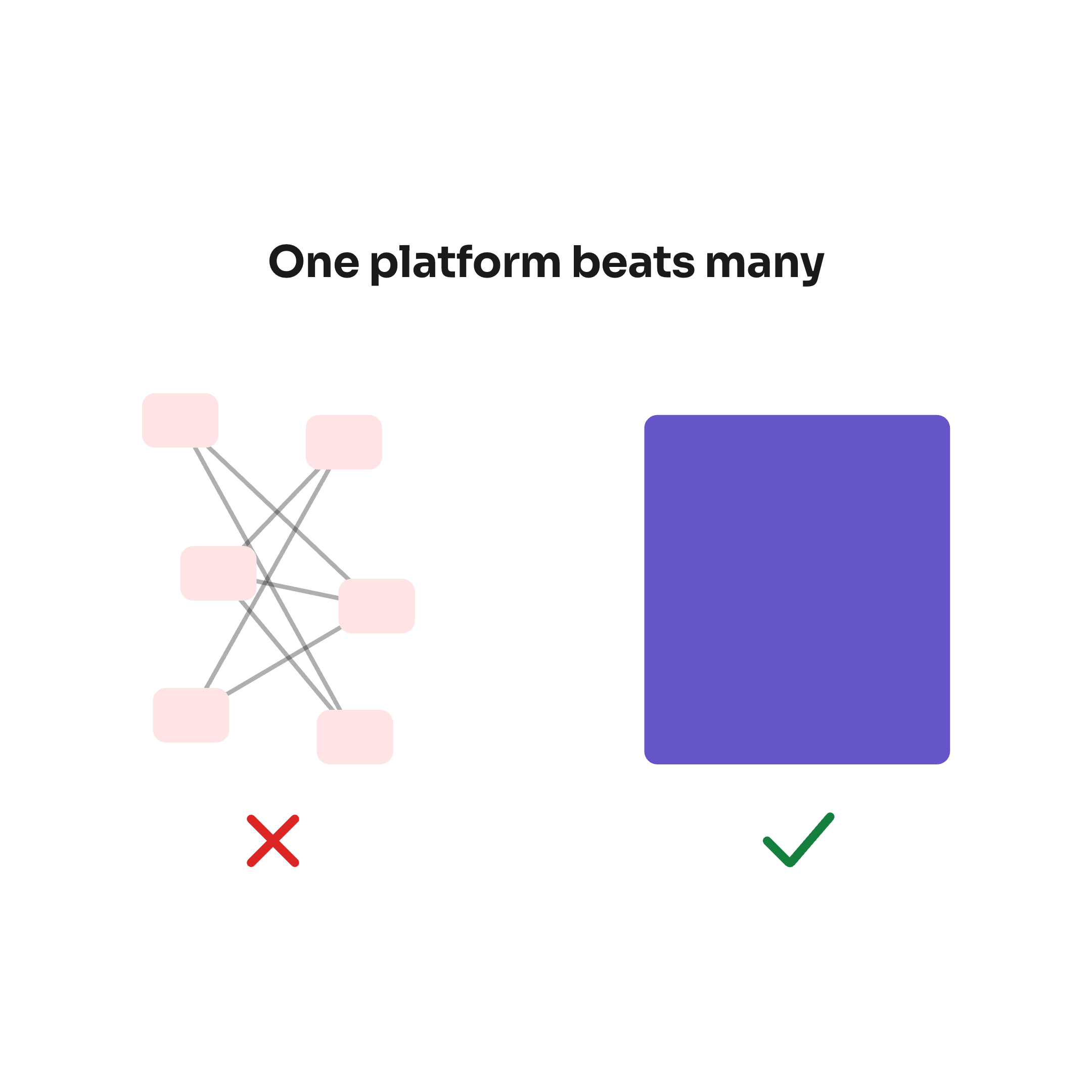
Every service added is another potential failure point. Most developers know this and add the services anyway, because best-of-breed feels responsible. It isn't.
The Sprawl Problem
Picture a standard web app stack: Auth0 for authentication, Stripe for payments, S3 for storage, PostgreSQL on Heroku for the database, SendGrid for email, Algolia for search, Twilio for SMS. That's seven services. Seven bills. Seven sets of API keys to rotate. Seven dashboards to check when something breaks at 2am.
None of that is exotic. That's just a basic CRUD app with common features. And the developer is already managing integration complexity like it's a full-time job.
The Consolidated Alternative
One platform can cover authentication, database, file storage, hosting, serverless functions, and analytics — all wired together by default, all on one bill, all documented in one place. Less powerful than best-of-breed in every individual category? Sometimes. Good enough for the vast majority of products? Absolutely.
Nobody wins by using the most sophisticated tools. The win comes from shipping and staying sane.
The Hidden Cost of Every Integration
Each external service comes with a maintenance burden that compounds over time: initial setup, ongoing monitoring, version updates, security patches, API changes nobody asked for, billing anomalies, and documentation that's always slightly out of date. Multiply that by the number of services and the developer has created a second job that produces nothing users care about.
When to Deviate
Specialized requirements justify specialized tools. High-volume transactional email, complex search at scale, strict data residency requirements — these are legitimate reasons to reach for a dedicated service. But a clear business case is needed, not a vague feeling that a dedicated tool is "more professional."
Default to consolidation. Deviate when the operational cost is worth it, and only then.
The Migration Myth
"We'll consolidate now and migrate to dedicated services later." That migration almost never happens. The cost is too high, the timing is never right, and the existing system is just functional enough to keep deferring it. Choose platforms the project can live with long-term. The early decisions stick.
Next: Client Decides
Which Engineering Principles Matter for a Startup?
The ones that let you ship every week: build only what is worth building, fix the budget, flex the scope, and finish one task at a time.Full answer·5 min readWhen Should You Build Custom vs Buy Off the Shelf?
Default to buy. Build custom only when the custom part IS your product's value. Everything else is glue — and glue should come off the shelf.Full answer·1 min readHow Should a Startup Choose Its Tech Stack?
There is no best stack. There's a best stack for your specific situation. Match the stack to business reality, not trends.Full answer·2 min read