Diligence · Principle 19 of 33
Incident Response
Stop the bleeding first, then find the root cause.
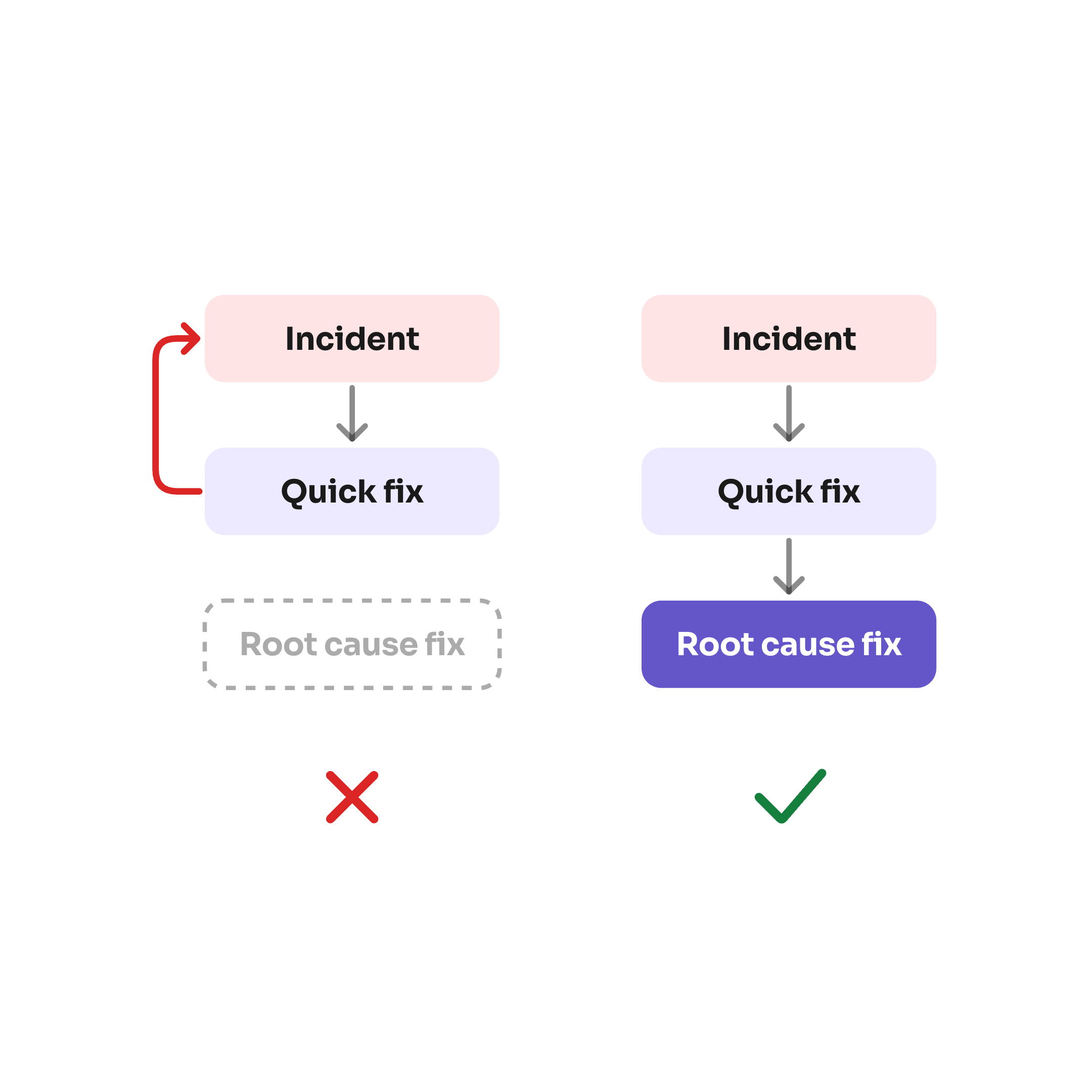
Something breaks in production. The response has two phases, and mixing them up is the most common mistake.
Stop the Bleeding
Phase one is recovery. Figure out what's happening — check logs, reproduce the issue, determine the blast radius. Infrastructure or code? How many users affected? These questions narrow the search fast.
Then find the smallest possible fix to restore the system. Don't try to understand the full picture yet. Ship the patch. Breathing room restored.
Find the Root Cause
Phase two is surgery. Schedule the deep investigation. Find why it actually broke, not just what broke. Fix it properly. Ensure the same failure can't happen again.
The temptation is to skip phase two once the system is back up. That's how the same incident happens three times. The quick fix buys time — the root cause fix is the actual work.
Prevention Over Response
The best incident response is the one that doesn't happen. Monitor from day one so the developer knows before the client does. Deploy small to isolate changes. Feature flags to kill a bad release in seconds. Safe-to-fail means the system was designed for this moment.
When prevention works, incidents become rare. When they do happen, the same monitoring and tooling that prevents most incidents also makes the ones that slip through easier to diagnose.
In Practice at Varstatt
Something breaks — the developer drops everything and gets to a computer. No escalation matrix. No on-call rotation. No waiting for someone else to triage. The developer responds directly, immediately or as soon as physically possible.
Communication is simple. The client provides whatever data they have. The developer goes autonomous the moment something's wrong — no waiting for the client to diagnose the problem.
Postmortems are not a ceremony. They're the same async updates sent for normal work: what broke, why, what was done, what will prevent it. Written in the regular channel, in the regular format. No incident report templates. No blameless retro rituals. Just honest updates about what happened and what changed.
Next: Documentation