Partnership · Principle 22 of 33
Pricing Conversation
The price is on the website — here's how the conversation goes.
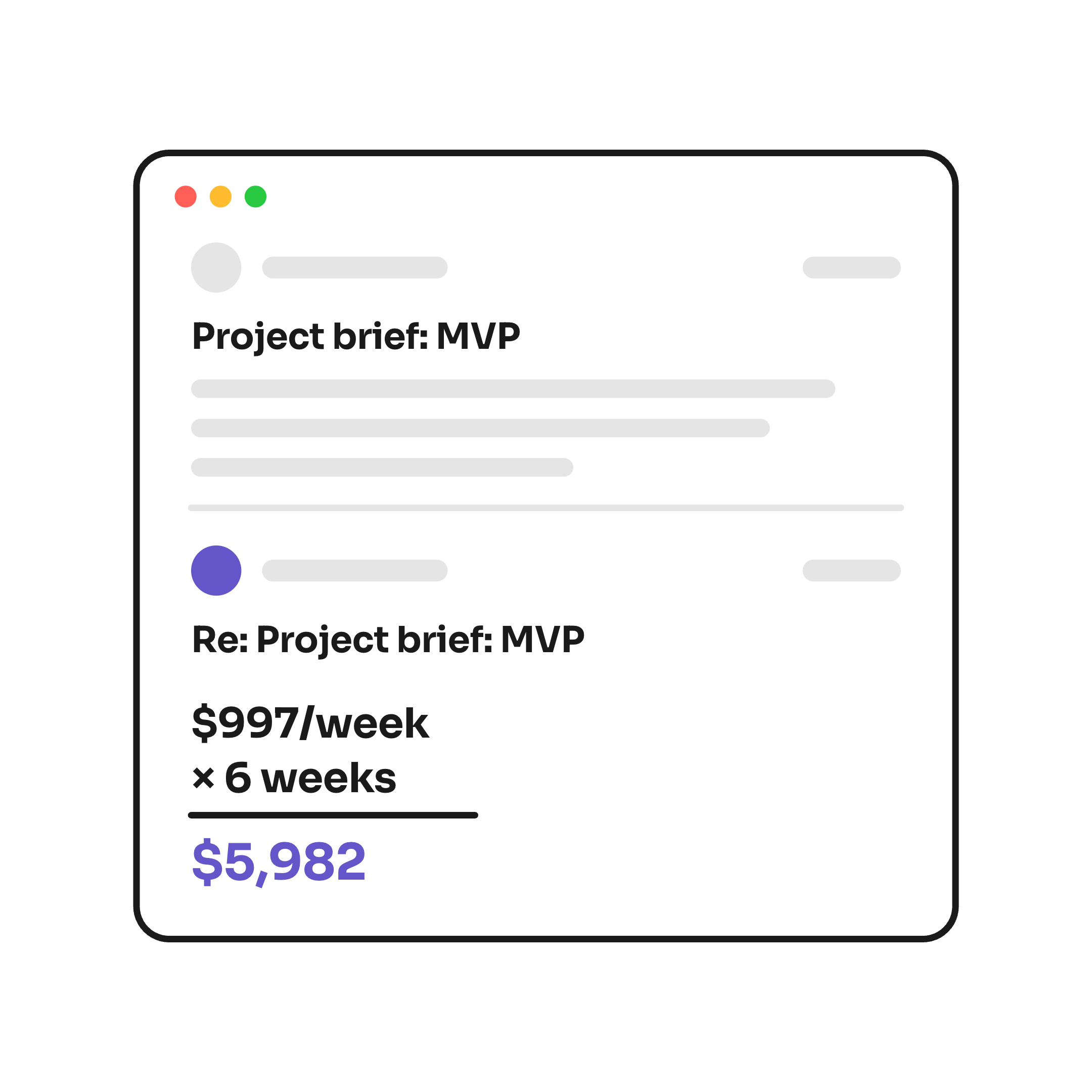
Pricing should be public. If a prospect reaches out, they've already seen it. Self-selection starts before anyone talks. No hidden fees. No "it depends" pricing theater.
Keep It Simple
The pricing conversation itself should be simple: fixed retainer, estimated timeline, total investment is multiplication. Nothing more. This fee structure allows the developer to do good work, keep fewer clients, and give each one continuous results.
The Hours Red Flag
If a prospect needs corporate framing, the developer can explain it as a part-time engagement. But this is usually a red flag. When the client needs to hear hours, the project will fail.
Why? Because counting hours means the client is buying time, not outcomes. They'll optimize for hours spent instead of results delivered. They'll question whether a 30-minute task was really 30 minutes. They'll want timesheets. And the developer will spend more energy justifying time than doing actual work.
Let the Model Self-Select
The best clients never question the price. They see the value, they see the model, they commit. The ones who push back on hours or demand to understand "what amount of work they get" — those are tire-kickers or corporate procurement people optimizing for the wrong metric.
The developer can try to explain with examples of what typically gets delivered in a week. Sometimes that helps.
But if the conversation keeps circling back to hours and outputs and utilization rates, listen to that signal. It's telling the developer this client doesn't fit the model. And forcing a fit will make both sides miserable.
Price publicly. Explain simply. Let the model self-select.
In Practice at Varstatt
In Varstatt, the initial timeline is included in the response to the brief: the fee is X per week, the estimated project length is Y weeks, total investment is X times Y. On the discovery call, Varstatt repeats it. That's the entire pricing conversation.
Next: Transparency
What a Freelance Web Developer Actually Charges
My actual pricing model, why hourly billing is broken, and what clients should expect when hiring a freelance web developer in 2026.Full answer·6 min readHow Should Founders Think About SaaS Development Costs?
SaaS development isn't a one-time build. It's a weekly investment. The real question is how much per week you're willing to invest.Full answer·2 min read